Salons work mainly with permanent oxidative colour in cream, the one that covers grey and lasts longest, and add an ammonia-free colour for sensitive scalps and a semi-permanent direct colour for toning and fashion shades. The best professional colour covers grey completely, offers a wide shade chart and gives the same result batch after batch.
How Many Types of Hair Colour Are There?
Salons work with three colour systems, and each one solves a different service. The difference is whether the colour is fixed by oxidation inside the fibre or deposited on it without oxidising.
| System | How it works | Which service |
|---|---|---|
| Permanent oxidative | Pigment fixed with developer | Grey coverage, shade changes |
| Ammonia-free permanent | Oxidation with another alkaliser | Sensitive scalps, maintenance |
| Semi-permanent direct | No oxidation, washes out | Toning, pastels, fashion shades |
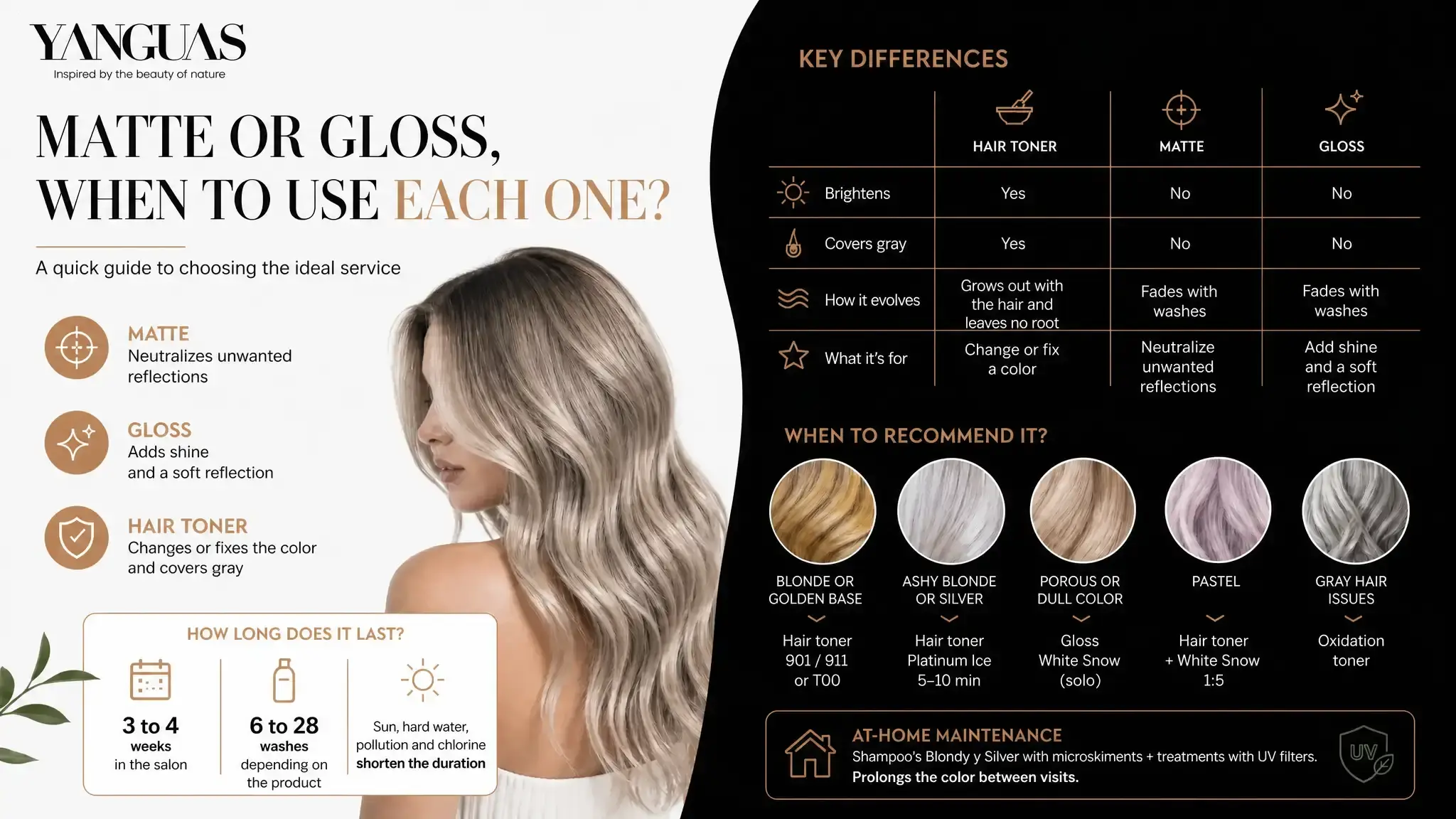
Toners are not a separate system: they are shades within a range that neutralise undertones on hair that has already been lightened. Nor is the developer, although it decides half the service. With a professional permanent colour the stylist chooses the volume according to the result she wants, and that choice is exactly what the home kit lacks, since it comes with its developer already fixed.
Two questions are enough to choose a system in front of the client: how much grey she has and how long she wants the change to last. A lot of grey and a colour for months points to permanent; an undertone she wants to change often, to direct colour.
Which Hair Colour Lasts the Longest?
Permanent oxidative colour lasts longest, because the pigment is fixed inside the fibre and does not wash out. What brings the client back to the salon is root regrowth, not the colour fading away.
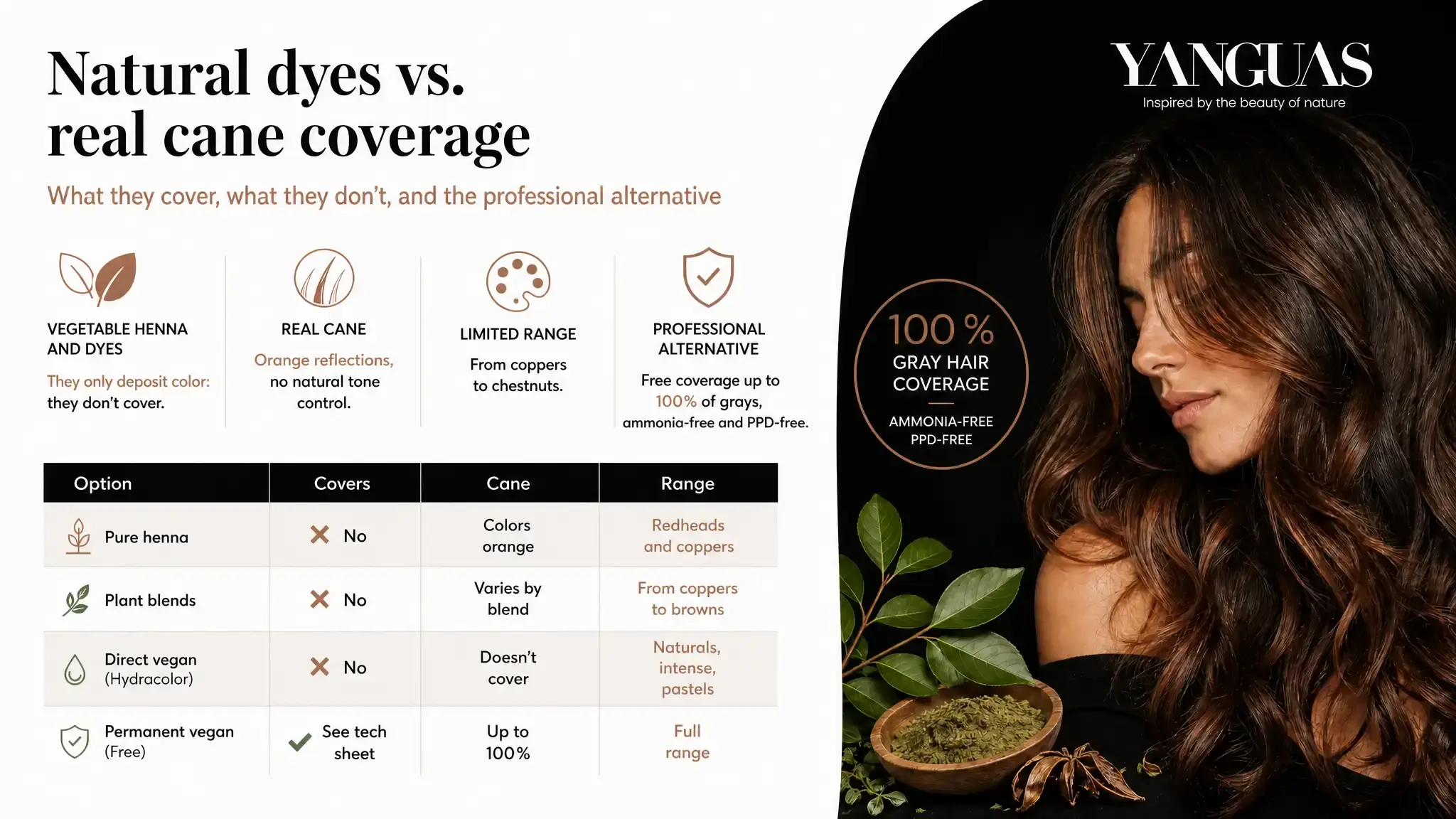
Direct colour works the other way round: there is no oxidation, the colour stays on the surface and is lost wash after wash. That is why it cannot cover grey, but it suits creative services the client wants to refresh often. In the Yanguas range it is Hidracolor, which is left on for about 10 minutes on hair bleached to an almost white blonde.
The ammonia-free version is still an oxidative permanent, so how long it lasts depends on the formulation, not on the absence of ammonia. What does lengthen the life of any colour is aftercare at home: a finishing serum such as Vibrant Color Protect, with UV filters and free of silicones and sulphates, protects against colour loss between visits.
What Is the Best Professional Hair Colour?
There is no winning colour for every salon; there are five selection criteria that separate a professional brand from a generic one. Check them before changing supplier, because a colour switch means rebuilding protocols and shade charts.
| Criterion | What to check |
|---|---|
| Grey coverage | The permanent line claims full coverage |
| Shade chart | Naturals, intensifiers and toners |
| Developer | Same manufacturer, several volumes |
| Fibre protection | A technology active during oxidation |
| Consistency | In-house manufacturing, every batch checked |
The last criterion is the one salons check least and the one that costs most. A shade that comes out differently between two orders has to be corrected at the chair, and that correction is never billed. Ask the manufacturer where the colour is made and which checks each batch passes before it leaves the plant.
Which Colour a Salon Working with Yanguas Uses
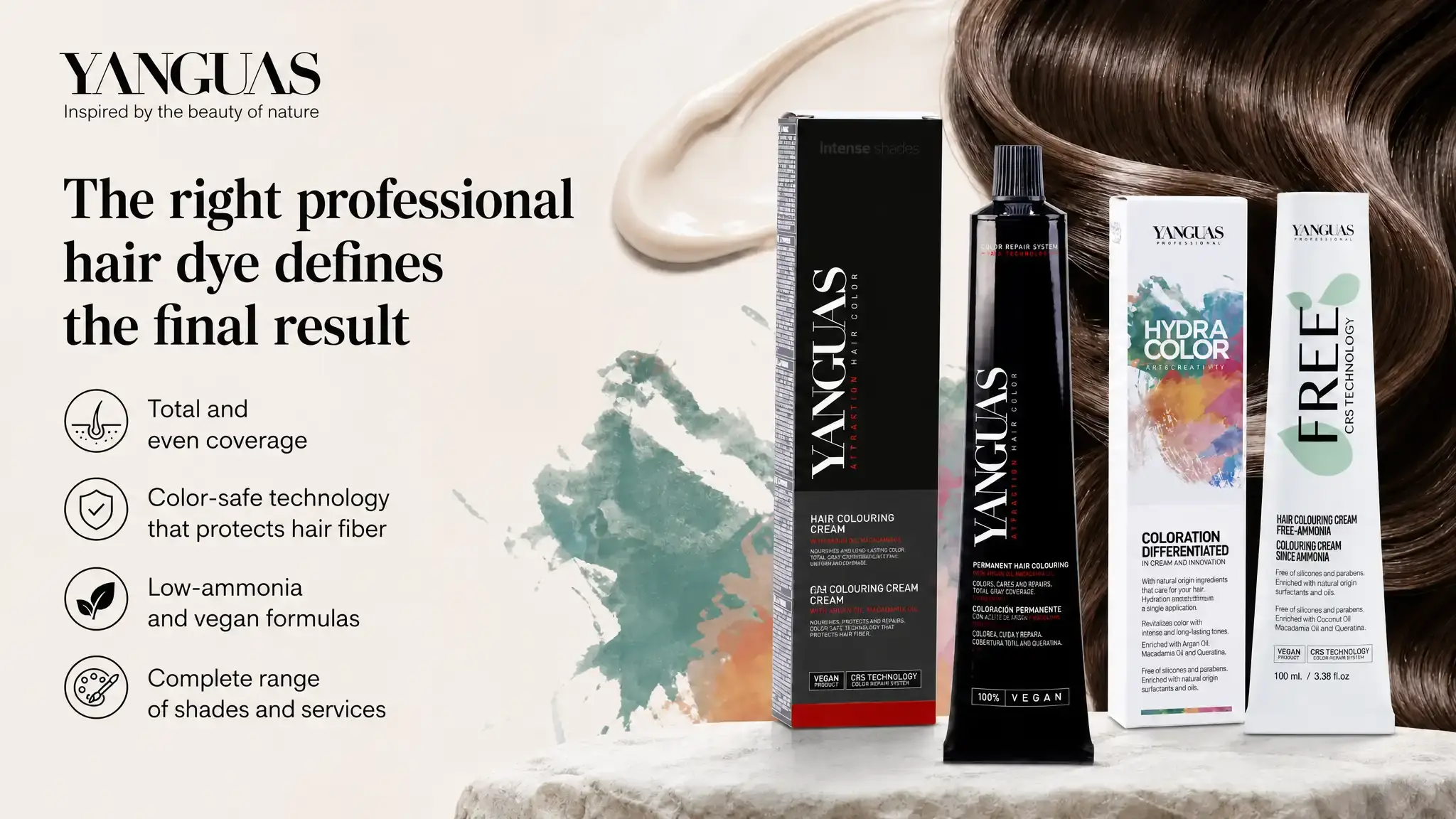
The permanent cream colour of Yanguas Professional is Attraxtion. The brand has made colour only for the professional channel since 1994 in Tudela (Navarre), from raw material to packaging, and releases no batch without first testing it, physically and microbiologically, at its own facilities.
- Type
- Permanent cream colour
- Shades
- 122
- Grey coverage
- Full
- Technology
- CRS (Color Repair System)
- Actives
- Argan and macadamia oil
- Formula
- Vegan
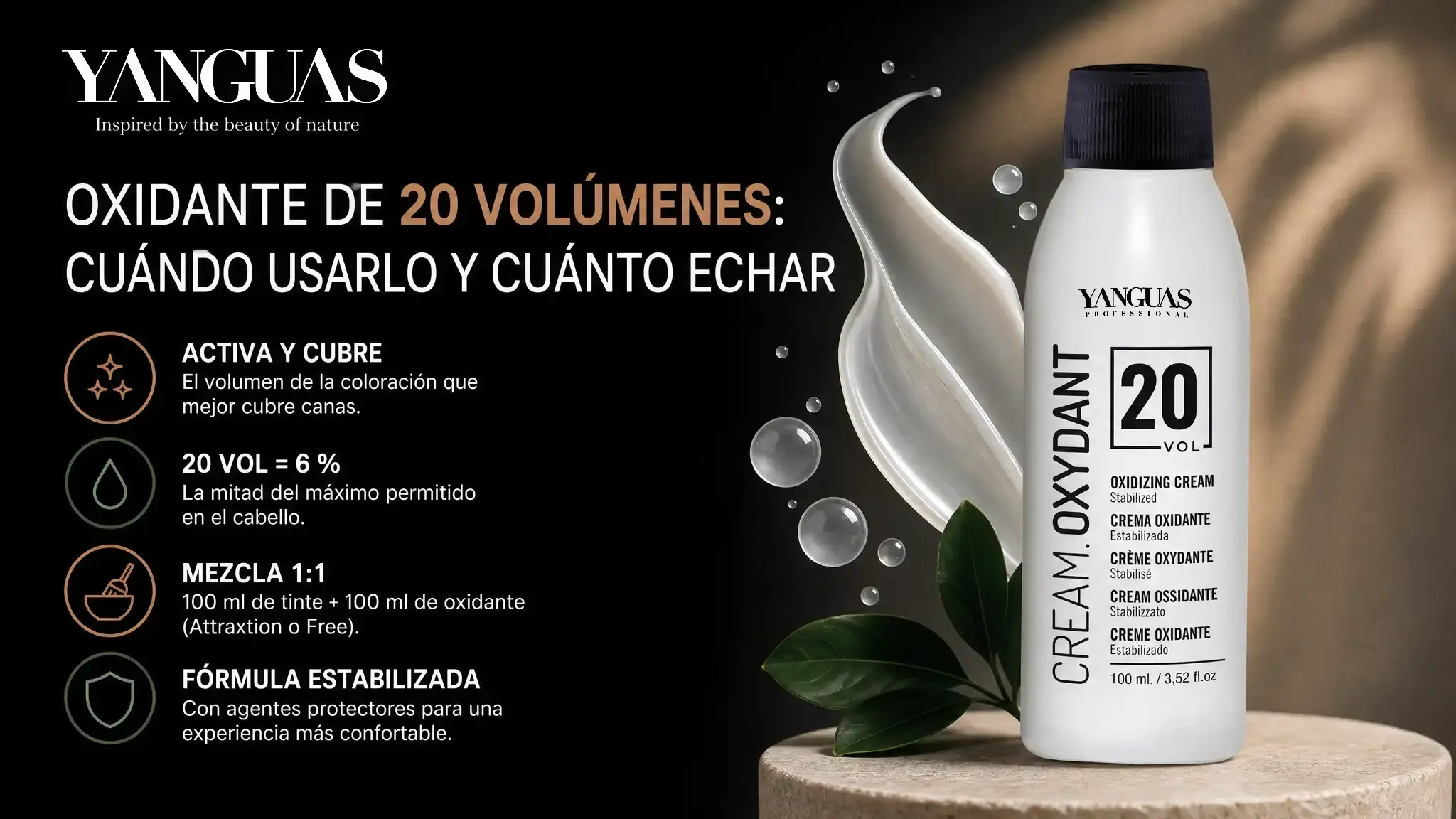
CRS technology protects and regenerates the fibre while the pigment penetrates. Attraxtion is mixed with the brand's stabilised cream developers, from 5 to 40 volume, in 100 ml and 1000 ml sizes. Next to the naturals, its chart includes intensifiers such as 0.66 red, 0.33 gold or 0.11 blue and the 901 ash toner.
The range is completed by Free, an ammonia-free and PPD-free permanent cream with argan, keratin and Repair Oil + CRS technology, and Hidracolor, the vegan direct colour with no oxidation, no ammonia, no sulphates and no parabens. For lightening there is Deco.Plex, which lifts up to 9 levels; if gold remains at the end, its technical sheet says to tone with Attraxtion 901 or 911.
How to Change Colour Brand Without Rebuilding Your Whole Chart
The fear of a salon changing brand is not the new colour, it is relearning the shade chart with real clients in the chair. It shrinks if you start with the shades you use most, the naturals of your regular client, and leave the fashion shades until the team has mastered the base.
Do the first application of each shade on a test strand and note processing time, developer volume and result; that sheet is what any stylist on the team can then repeat. To shorten that curve, the Yanguas Academy gives courses and Master-Classes throughout the year, and your local distributor hands you the technical sheets and point-of-sale material.
Ask your local distributor for the shade chart and technical sheets of Yanguas professional colour and do the first test on the client with the most grey: she is the one who will tell you in a single visit whether the change pays off.