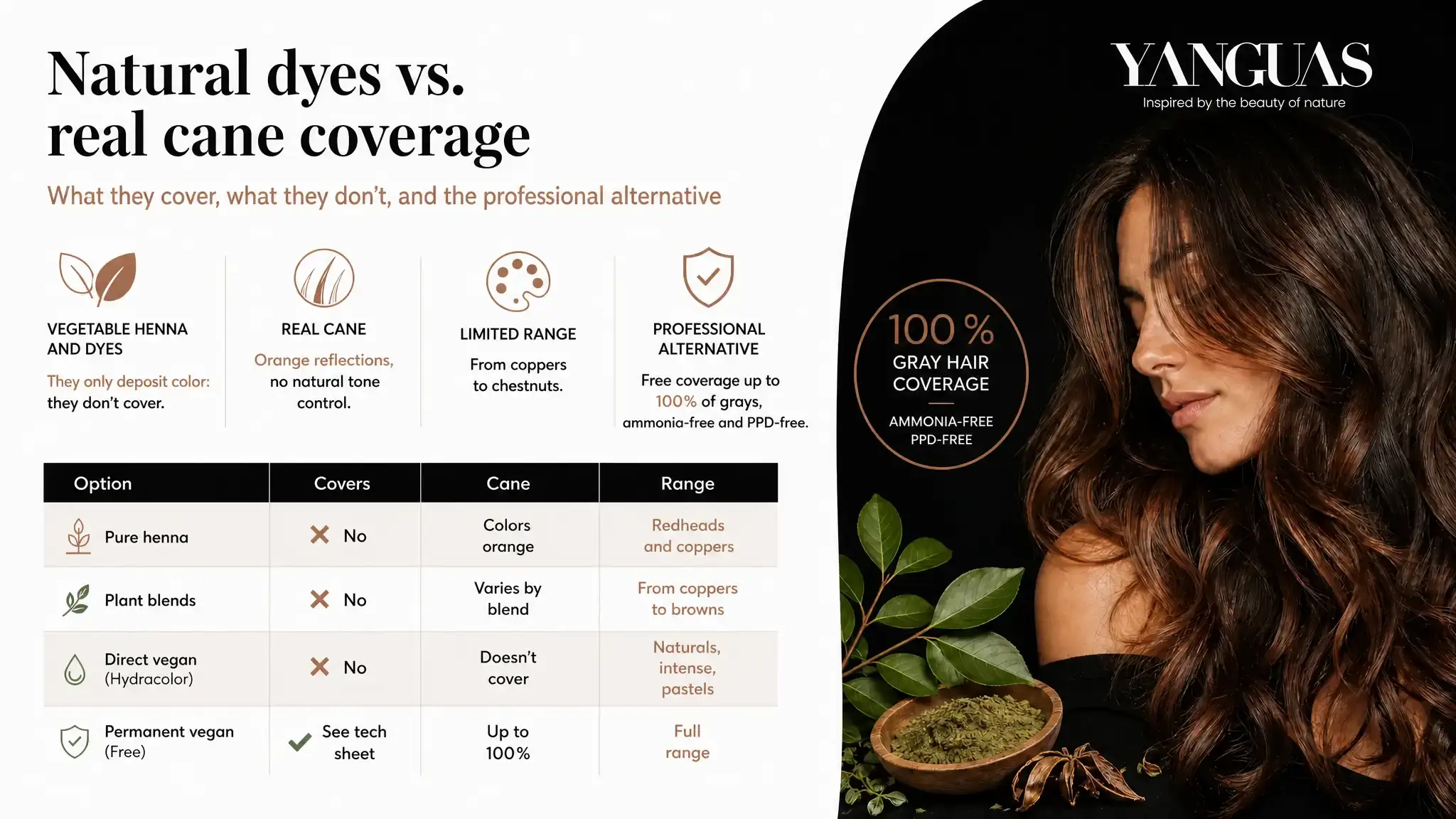
Henna and plant dyes only deposit colour: they do not lift, they move within a short range from coppers to browns, and on grey hair they give an orange reflect rather than a controlled natural shade. A vegan permanent colour such as Free covers up to 100 % of grey across its whole chart, without ammonia or PPD.
What Does Henna Do to Hair?
Henna is the powdered leaf of the Lawsonia inermis plant. Its natural colourant binds to the fibre without oxidation, so it does not open the cuticle to lift or remove pigment: it only adds colour on top of what is already there.
As a hair dye it has been assessed in Europe. The European Commission's Scientific Committee on Consumer Safety concluded in its opinion on henna (SCCS/1511/13) that it is safe as a hair dye under the conditions it studied, with 100 g of powder mixed with 300 ml of boiling water, and left out other extracts with a different composition.
The limit is the colour range. Pure henna gives reddish and copper tones; any other result means adding other plants or other ingredients, and that is where a "natural" product stops being something whose contents you know.
What Natural Dyes Cover and What They Do Not
The question that decides the service is grey hair. On white hair, henna has no background pigment to blend with, and the result is the plant's colour in its pure state, usually an intense orange or copper. It is real grey coverage, but in a single colour register.
| Option | Lifts | Grey | Range |
|---|---|---|---|
| Pure henna | No | Dyes it copper | Reds and coppers |
| Plant blends | No | Varies with the blend | Coppers to browns |
| Vegan direct (Hidracolor) | No | Does not cover it | Naturals, intense, pastel |
| Vegan permanent (Free) | See technical sheet | Up to 100 % | Full chart |
Nor does henna wash out the way a direct colour does: it stays in the fibre and builds up with each application. A client who wants to change colour later depends on regrowth or a cut.
Which Natural Dyes Do Not Damage Hair?
Because it does not oxidise, pure henna does not cause the chemical wear of a permanent colour. The problem is the label: "natural" does not say what the product contains, and blends that promise blacks or blondes almost always carry more than plants.
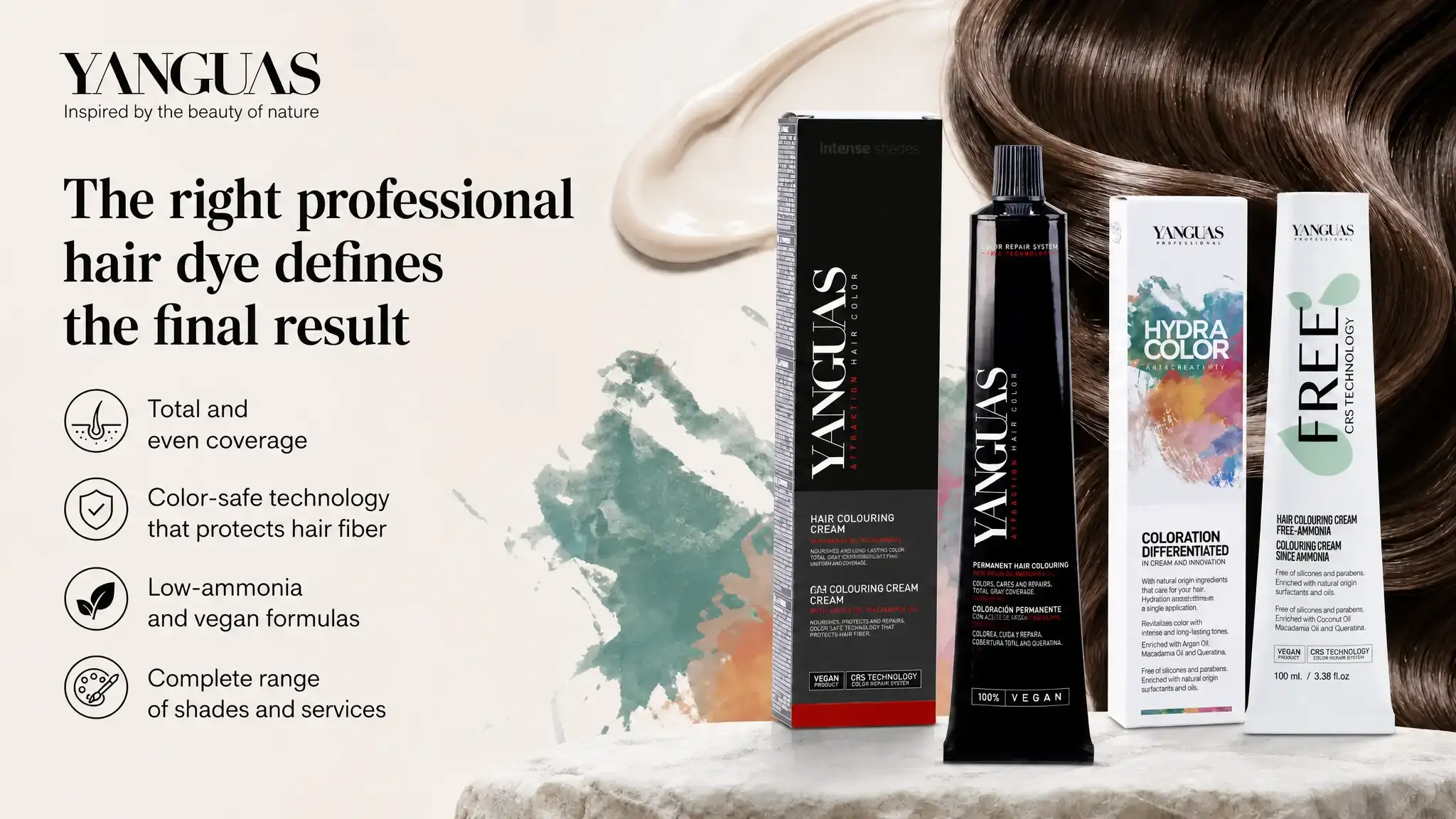
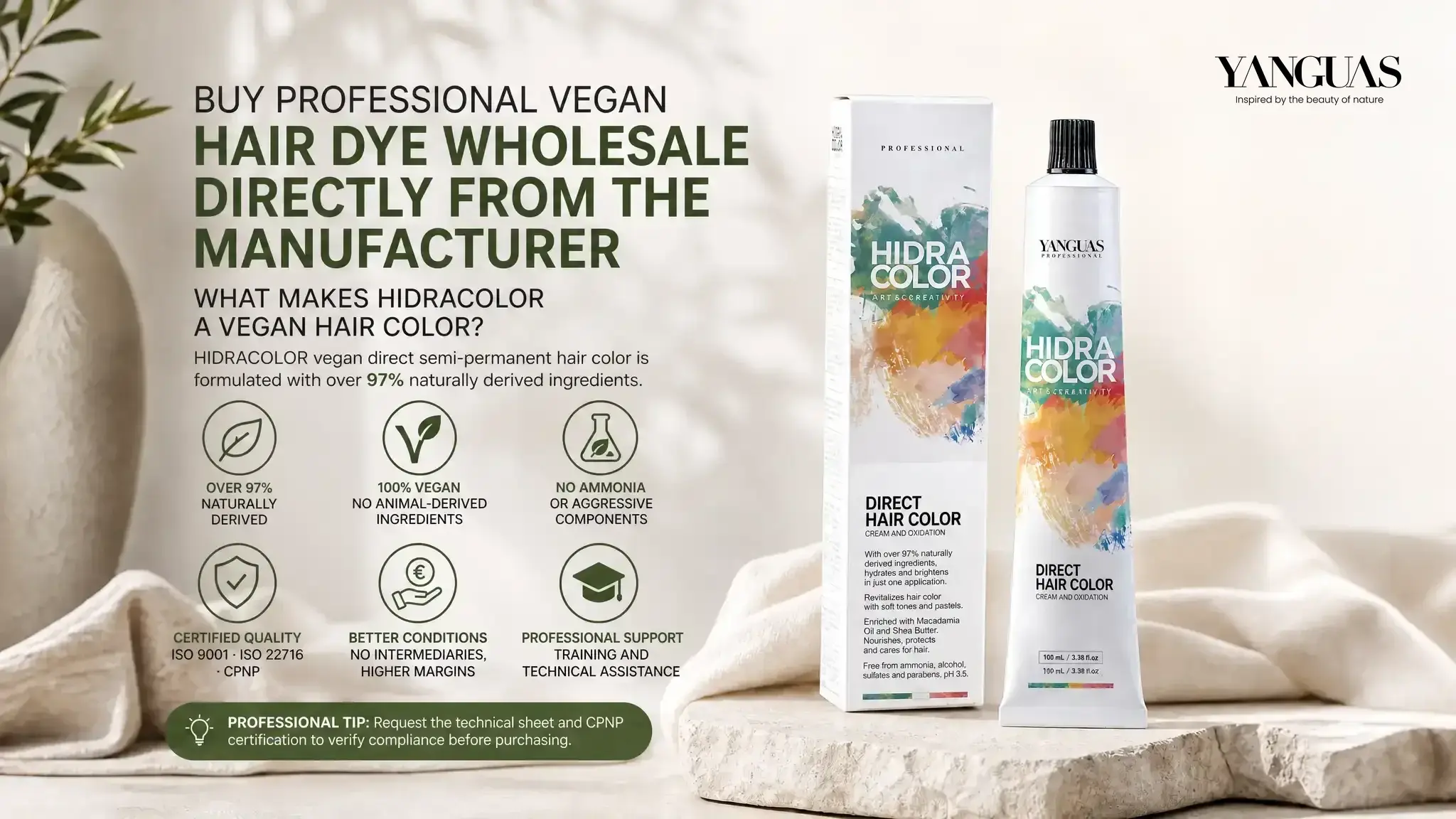
For clients looking for a gentle colour, the salon has professional alternatives with a known formula. All three Yanguas colour lines are vegan:
- Hidracolor
- Direct, no oxidation
- Hidracolor free from
- Ammonia, sulphates, parabens
- Free
- Permanent, no ammonia or PPD
- Free, grey coverage
- Up to 100 %
- Attraxtion
- Permanent cream, 122 shades
Hidracolor, with macadamia oil, revives colour and fades evenly with washing, like a henna that actually goes. Free carries argan oil, keratin and Repair Oil + CRS technology, and it is the choice when the client wants to cover grey in a natural shade. The difference between removing ammonia and removing PPD is explained in what professional ammonia-free colour is.
Henna and Oxidative Colour Should Never Be Mixed Blind
Hair with henna does not react to an oxidative dye the way virgin hair does. The plant colour already in the fibre changes the result, and so-called compound hennas, which add metallic salts to darken, can react with the developer.
That is why the client's history comes before the colour chart. If she has used henna in recent months, or does not know what her product contained, the service starts with a test strand, not at the roots.
💡 Technical tip: cut a strand from the nape, apply the developer mix you plan to use and watch it for the full processing time. If it heats up, smokes or changes colour oddly, there is no oxidative service that day.
Nor should you count on a colour remover to take it out. Yanguas Color.Remover is formulated to remove unwanted oxidative colour, and henna is not that.
What Is "Black Henna" and Why Does It Matter in the Salon?
Black henna is not henna. It is henna mixed with para-phenylenediamine (PPD), the dye that gives the glossy black of temporary tattoos at beaches and markets, and which is banned for direct use on the skin, as the Spanish medicines agency AEMPS warns. The US regulator puts it plainly in its fact sheet on henna and black henna:
The extra ingredient used to blacken henna is often a coal-tar hair dye containing p-phenylenediamine (PPD), an ingredient that can cause dangerous skin reactions in some people.
The AEMPS adds that people can be left permanently sensitised, so that later contact with PPD, present in many hair dyes on the market, can trigger allergic contact dermatitis.
The practical consequence is the diagnostic question: before colouring, ask whether the client has ever had a black henna tattoo or reacted to a dye. If the answer is yes, a medical consultation comes before any colour service, including one without PPD such as Free.
For salons that want to serve the natural-minded client without henna's limits, Free, Hidracolor and Attraxtion, with their colour charts, are in the Yanguas professional colour section.