A beauty products distribution business for salons opens in this order: decide which salons you will sell to and who visits them, choose your first brand, which sets your margin and territory, and only then size the warehouse. Buying from a Spanish manufacturer and reselling without relabelling needs no responsible declaration to the AEMPS.
Step One: the Channel and the Salon List
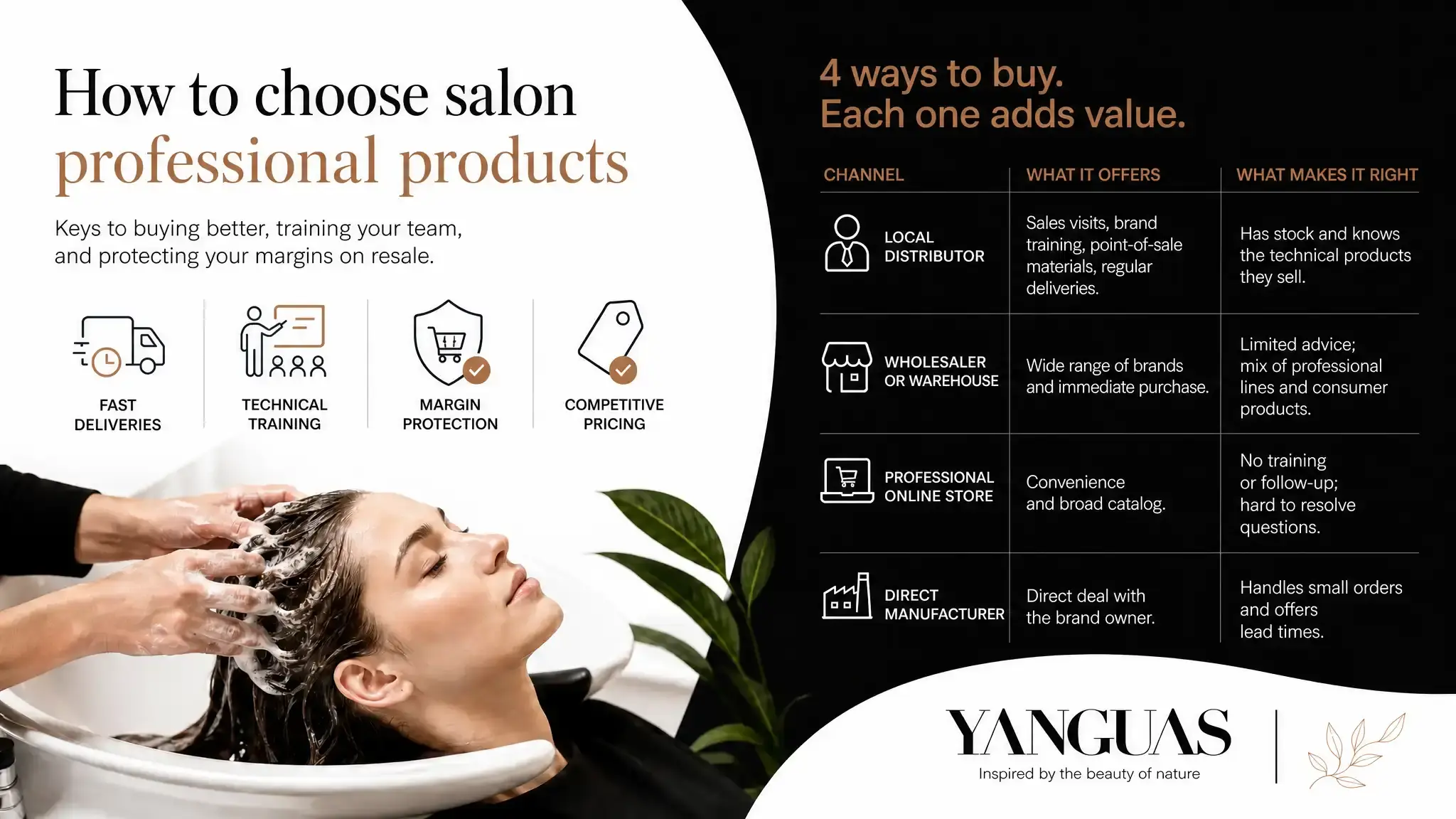
A beauty distributor can face the shop and the end consumer, or the professional salon. The second channel sells less volume per customer, but the relationship is steadier: a salon that works well with a colour line does not change it every month.
If you choose the professional channel, your asset is not the stock but the portfolio. Before talking to any brand, write down how many salons you can visit regularly, which towns they are in and which brands they use today. That list is the first thing any serious manufacturer will ask you for, and it decides the territory it offers you.
Anyone who has worked as a sales rep for a distributor already carries part of that list in their head. Anyone starting from scratch usually takes longer to build it than to find premises.
💡 Before your first meeting with a brand: bring the list of salons with their town and the colour brand each one uses. It is what opens the conversation about territory, and what sets a serious distributor apart from an occasional middleman.
What Permits Do You Need to Distribute Cosmetics in Spain?
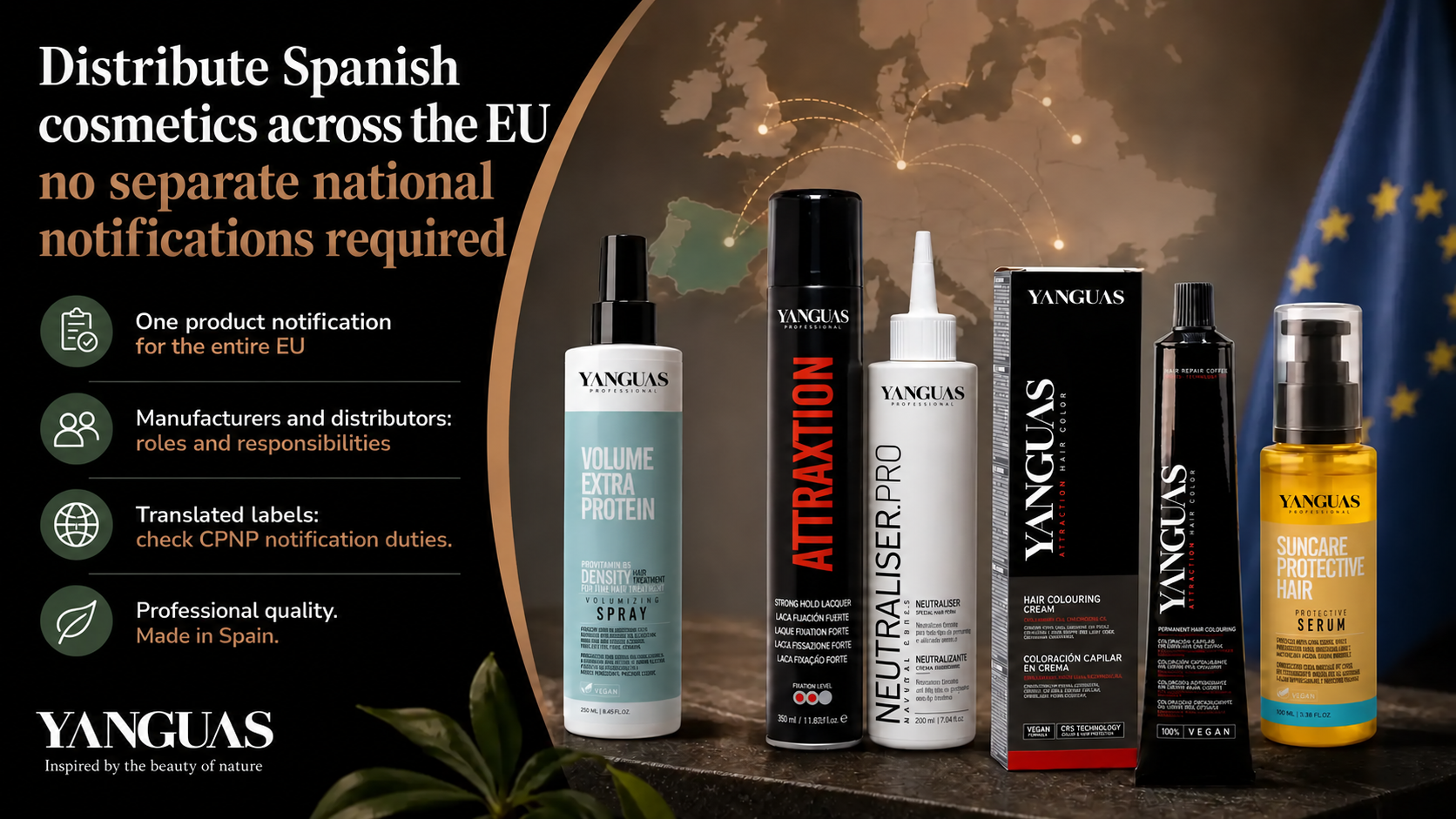
Fewer than it seems. The responsible declaration to the AEMPS, Spain's medicines and health products agency, is filed by those who manufacture, condition, package or label cosmetics in Spain and by those who import them from countries outside the European Union, according to the AEMPS FAQs on the responsible declaration. The same page leaves out of that obligation the distributor who only translates the labelling of a product already on the EU market.
If you buy from a Spanish manufacturer and resell the product as it is, you carry out none of those activities. What Regulation (EC) No 1223/2009 does require of you, in its Article 6, is to act with due care: check before selling that the labelling is complete, in the required language and within its date of minimum durability, and store and transport the product without spoiling it.
The rest is the paperwork of any trading company. If you later want to sell in another country, each market has its own rules, and what you should demand from the start is that the manufacturer supplies the technical documentation those registrations require.
Which Brand Should You Start With?
Many new distributors start with the brand that offers the best entry price, and find out too late that the product turns up cheaper online or that another distributor sells it in the same city. From then on, every visit turns into a price negotiation.
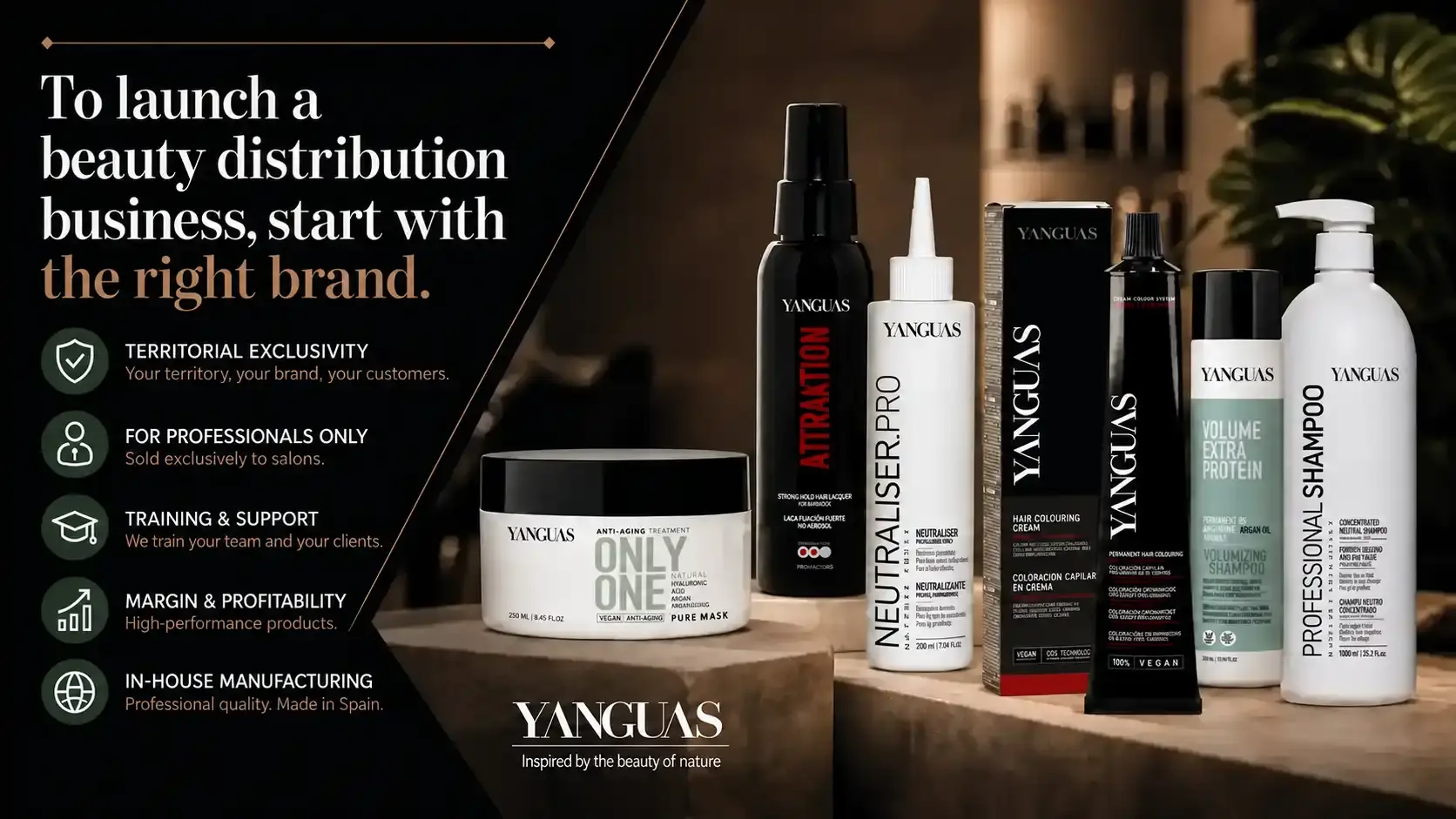
The first brand is chosen by looking beyond the catalogue:
| What to check | Why it matters at the start |
|---|---|
| Territorial exclusivity | No one else sells the brand in your area |
| Professional-only sales | The salon does not find it discounted online |
| Direct manufacturer | Stable supply and real technical support |
| Training included | Your clients learn to use it and reorder |
| Gradual onboarding | You do not need to buy the whole catalogue |
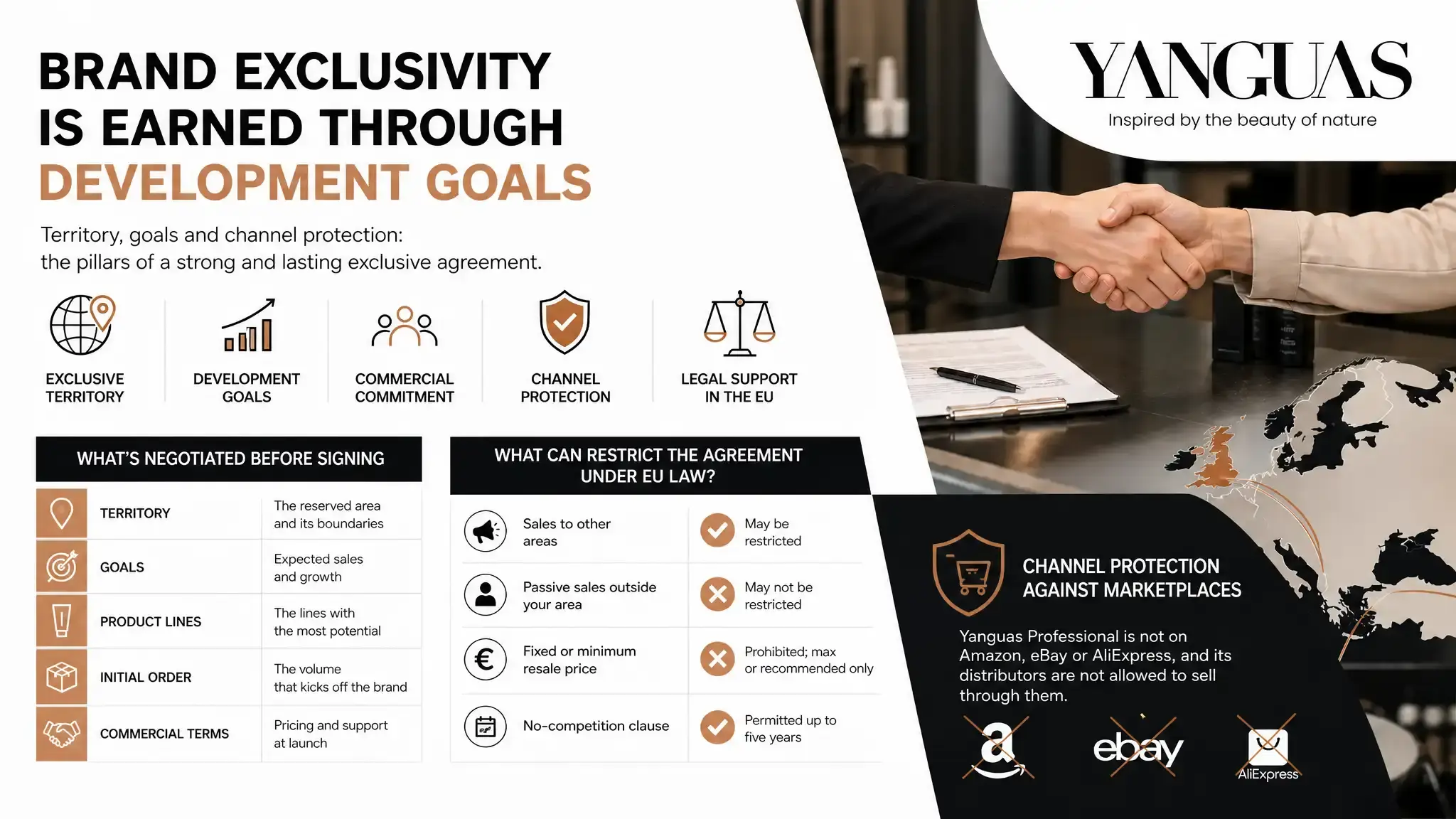
Territorial exclusivity turns your work of establishing the brand into an asset: a salon you open for a brand remains your client for as long as the brand is yours alone in that area. It is negotiated against purchase and development targets, and it pays to know from the first meeting which scope is realistic for your portfolio.
How Much Stock and Which Families to Start With
The warehouse is sized by the brand, not the other way round. With a supplier that manufactures in Spain and delivers within 24/48h to the mainland and the islands, as Yanguas does from Tudela (Navarre), you can start with short rotation stock and restock against real orders, with no customs or import waits.
Nor do you need to open with everything. Colour, bleaching, technical products and styling can come in gradually, and the usual approach is to start with the families that best suit the salons on your list. A salon that already trusts your colour line listens better when you present the treatment.
What the Brand Brings and What You Bring
A small distributor has no marketing department or trainers of its own, and it does not need them if the brand provides them. Manufacturer support is what lets you compete from the first month with larger distributors: technical training for your team and for the salons you bring on board, displays, posters and catalogues for the point of sale, and the selection of the families with most potential in your area.
Your part is the one no brand can do for you: visiting, restocking on time and being there when the salon has a question about a service. Yanguas Professional, with over 700 formulations in its portfolio and a presence in more than 25 countries, leaves that part to the distributor because it does not sell to salons directly or on marketplaces, and the price you defend on each visit does not compete with an online offer.
With the list and the channel decided, ask about distributing Yanguas Professional in your area and name the two families you want to start with: that way the first order is calculated on what your salons already buy.