How to Heal Cracked Hands and Fingers
Cracked hands heal with lukewarm water, patting dry, cream after every wash and a thick layer at night under cotton gloves. If a crack oozes, turns red around the edges or will not close despite the routine, a doctor or pharmacist should look at it, not a cream.
Why Hands and Fingers Crack
The skin on your hands dries out when it loses more water and oil than it can replace. According to MedlinePlus's self-care guide for dry skin, the main culprits are frequent handwashing, hot water and the dry air of winter and central heating. That is why cracks arrive with the cold and stay with anyone who works with wet hands.
Dry skin turns stiff and, where it bends, it splits. Cracks appear first on the knuckles, the fingertips and the sides of the fingers next to the nails, and on the cuticles, where hangnails start. Cold makes them worse; so do repeated water, soap, detergents and friction, because every wash strips away some of the oil that kept the skin sealed.
The people who suffer most are those who wet their hands many times a day: in a salon, a kitchen, a hospital or cleaning work, and at home when washing up by hand or looking after small children. Which ingredients to look for on a cream's label and what to do about chilblains are separate topics; this one is about closing a crack that is already open.
The Repair Routine, Day and Night
The routine has three parts, and it works when you do it every day, not only when it hurts. The night layer does most of the work, because those are the hours your hands stay dry.
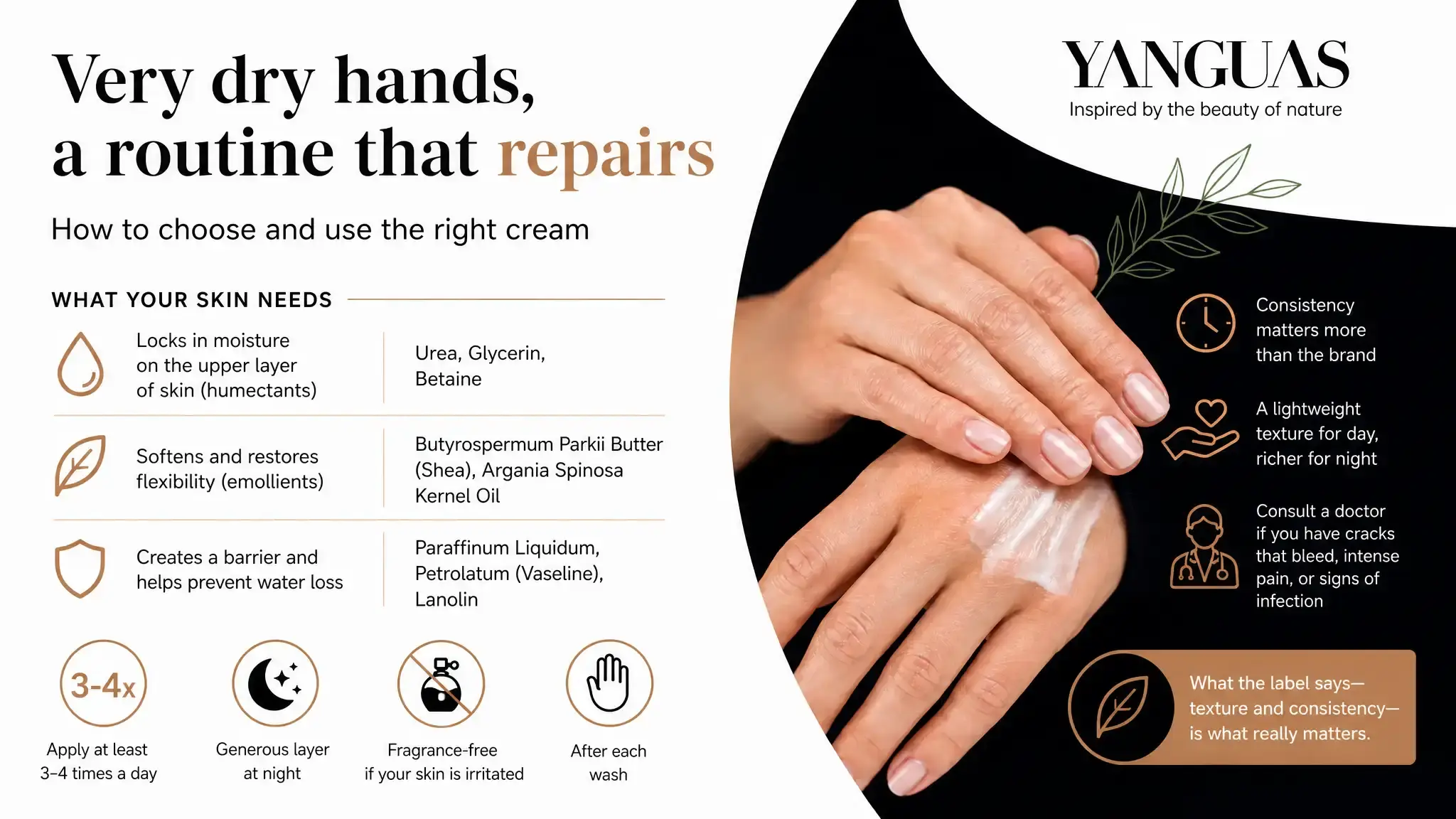
- At every wash, use lukewarm water and a mild, fragrance-free soap, on your hands only. Pat dry with the towel instead of rubbing, and dry carefully between the fingers.
- Straight after, apply cream while the skin is still slightly damp: MedlinePlus explains that moisturisers lock in moisture, which is why they work best on damp skin. Focus on the knuckles, fingertips and cuticles. If you do not wash your hands often, apply it at least 2 or 3 times a day anyway.
- Before bed, spread a generous layer of a plain cream or ointment, put on a pair of clean cotton gloves and leave them on overnight. This is the advice the NHS occupational health service in Birmingham gives for hands worn down by washing. Repeat it every night until the crack has closed.
- For washing up, cleaning or handwashing clothes, wear waterproof gloves. If your hands sweat inside them, wear cotton gloves underneath; the Spanish Academy of Dermatology recommends exactly that combination, because sweat makes eczema worse. When you go out in the cold, wear warm gloves.
To check it is working: in the morning the edge of the crack should look smooth and not pull when you make a fist, and your skin should not feel tight after washing. If a crack is slow to close but hurts a little less each day, the routine is doing its job; keep going.
💡 If you work in a salon: the AEDV advises vinyl gloves for washing hair and taking off rings and bracelets before any wet work.
Is Vaseline Good for Cracked Hands?
Yes, as a night layer. Vaseline (petroleum jelly) is an ointment: it adds no water, it holds in the water the skin already has. That is why it works better on freshly washed, still damp skin, and also why it is messy: in the daytime it leaves your hands slippery and ends up on your phone, keyboard or steering wheel. Use it at night, under cotton gloves, and keep a cream that absorbs for the day.
What home remedy works for cracked hands? The one you already have that does not irritate: lukewarm water instead of hot, patting dry, gloves for washing up and a greasy layer at night under cotton gloves. What you should not put on an open crack is anything perfumed, since fragrance is one of the ingredients the AEDV asks people with hand eczema to avoid.
What Condition Causes Cracks in the Hands?
The most common one is hand eczema, also called hand dermatitis. The AEDV describes it as an inflammation of the skin of the hands that leaves them red, rough and scaly, sometimes with cracks or small blisters, along with itching, pain, tightness or stinging. It affects about 10 % of adults every year, so it is not unusual for “dry” hands to be eczema in fact.
There are two main types. Irritant eczema comes from repeated contact with water, detergents or other products, and it is the one people get when they wash their hands many times a day. Allergic eczema appears when you touch a substance you are allergic to, and it can only be confirmed with skin tests done by a dermatologist, called patch tests.
See a doctor or pharmacist instead of carrying on with cream if any of these happens:
- The crack oozes, turns red and warm around the edges or hurts more and more: it may be infected.
- Your cracked hands bleed and the cracks do not close even though you follow the routine every day.
- There is redness, scaling or small itchy blisters, especially on the palms and the sides of the fingers.
- The itching or dryness keeps you awake, or you have sores from scratching.
Eczema is treated with medicines a doctor prescribes; no cosmetic cream cures it, even though moisturising stays part of the treatment.
What to Avoid So the Crack Does Not Reopen
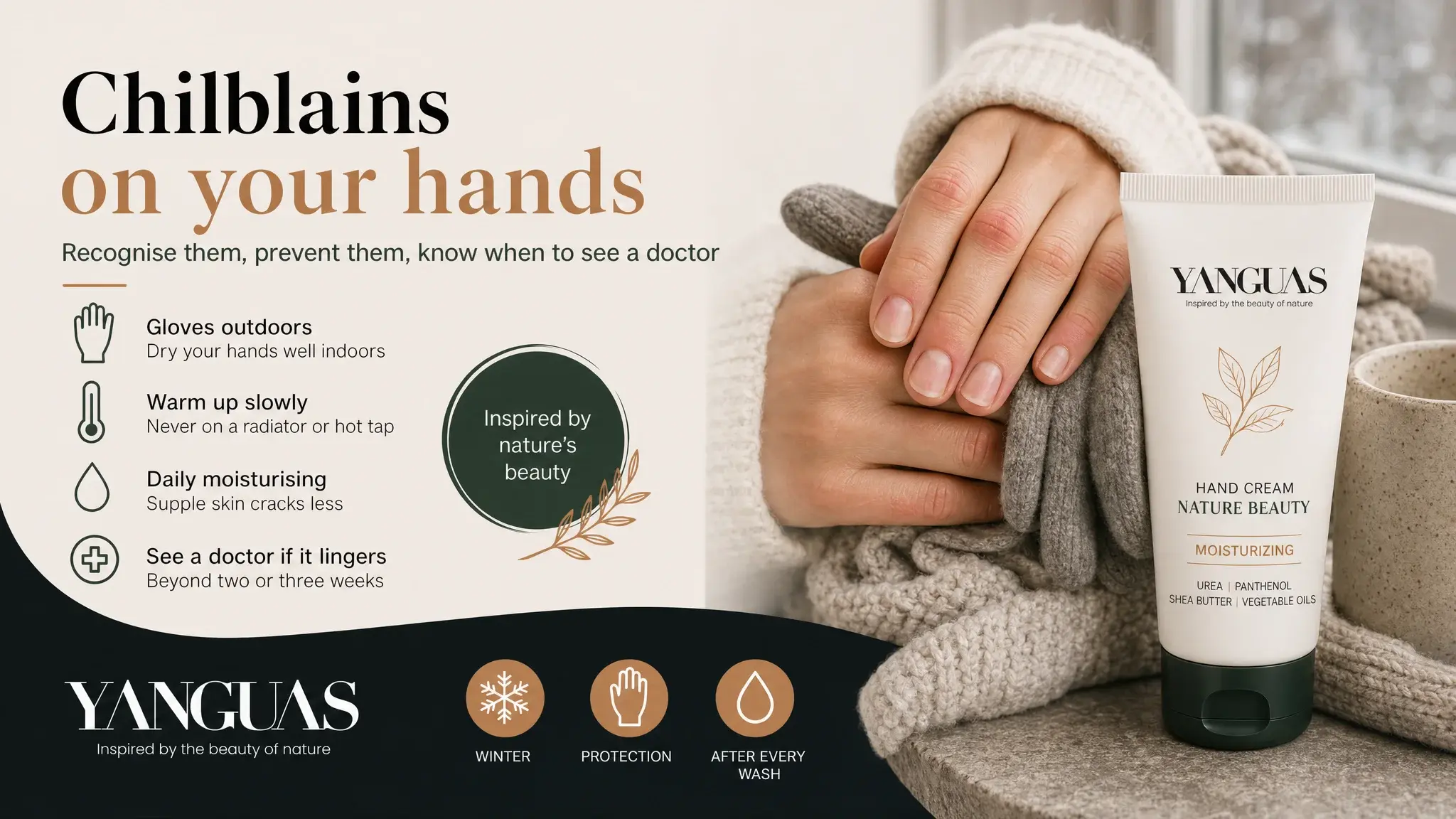
What reopens a crack is almost always what opened it. Avoid hot water, especially in the shower or at the sink; do not rub your hands dry or go outside with them still damp; do not tear off hangnails or trim the cuticle down to raw skin; and do not spend a working day in gloves without taking them off now and then, because the sweat inside irritates too.
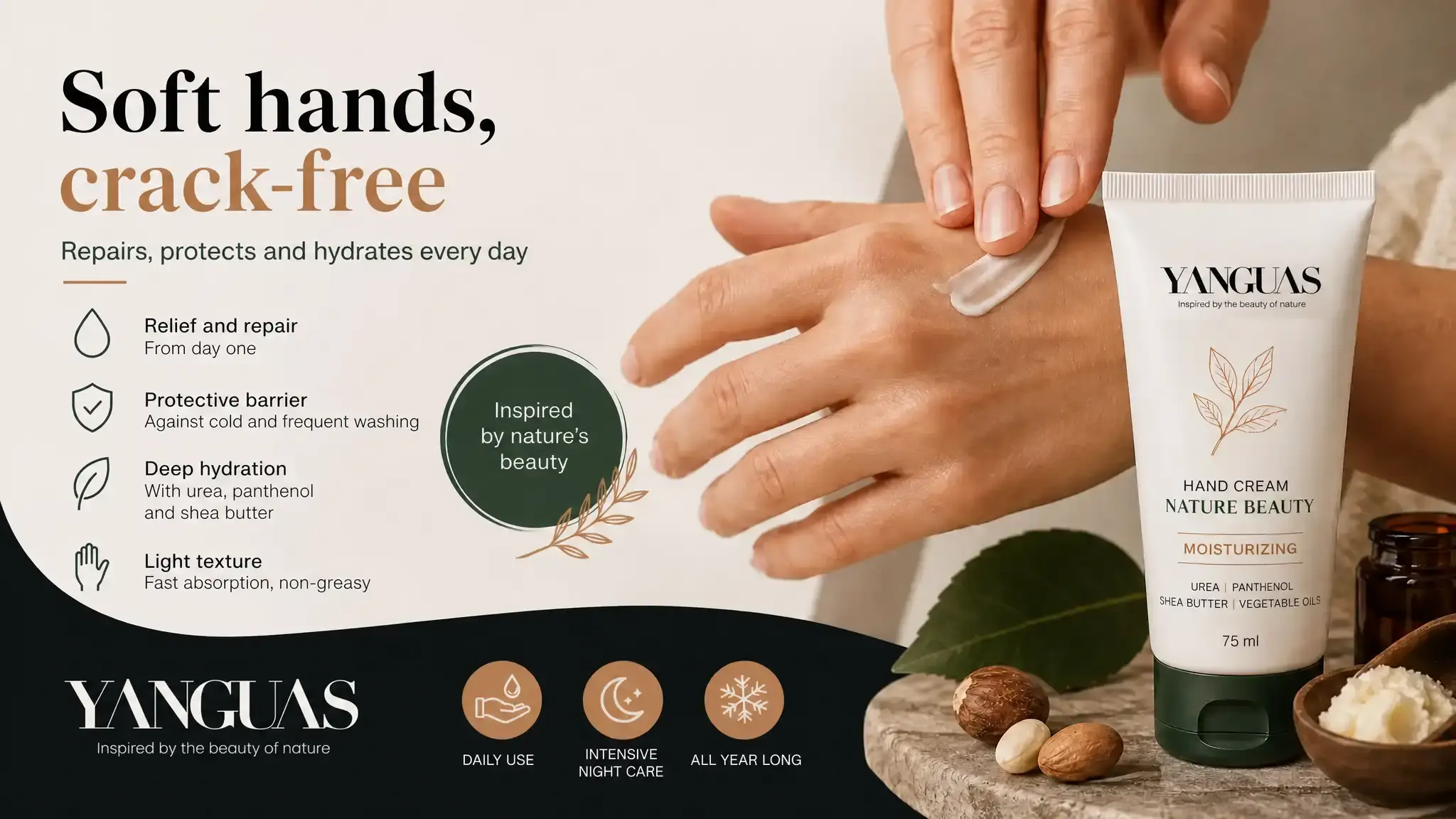
Once the crack has closed, the night layer no longer has to be nightly, but the step after washing stays: if your hands get wet a lot during the day, a small tube in your bag or at your workstation makes it easy to keep up. A small amount of our Nature Beauty hand cream, with urea, panthenol, shea butter and plant oils, massaged into the knuckles and cuticles after every wash, absorbs quickly and does not leave your hands greasy when you go back to work.