How to Recognise Chilblains on Your Hands and What to Do
Chilblains are a painful, cold-triggered inflammation of the small blood vessels in the fingers, and most clear up on their own within two to three weeks. A moisturising cream does not cure them: it keeps the surrounding skin supple. If one breaks open, oozes or has not improved by then, see a doctor.
What Are Chilblains on the Hands?
In the cold, the blood vessels in your fingers narrow and blood flows more slowly. When the skin warms up again, the vessels near the surface widen while the deeper ones stay narrow, and that mismatch causes the pain, the itching and the change of colour, as the NHS explains. That is why a chilblain does not appear while you are outside, but a few hours later.
The MedlinePlus medical encyclopedia describes chilblains as a painful inflammation of small blood vessels. In other words, a circulation problem in the skin rather than a lack of water on its surface, which is what separates a chilblain from dry hands and what decides how to deal with each.
The two get confused because they arrive together, in the same months and on the same hands. This table helps tell them apart:
| Sign | Dry Hands | Chilblain |
|---|---|---|
| When it appears | After a lot of hand washing or in cold, dry air | A few hours after being in the cold |
| What you see | Rough, tight skin, sometimes with cracks on the knuckles | Red or purple patches on the fingers, harder to see on darker skin |
| What you feel | Tightness and roughness | Itching or a burning feeling |
| How it develops | Improves when you moisturise consistently | Usually clears up on its own within two to three weeks |
If all you feel is tightness and roughness, you are dealing with dryness, and choosing a cream or healing cracked fingers is a different subject from this one. When your fingers turn first white and then bluish and red, it may be Raynaud's phenomenon, another reaction to cold that a doctor should also assess.
How to Prevent Chilblains in Cold Weather
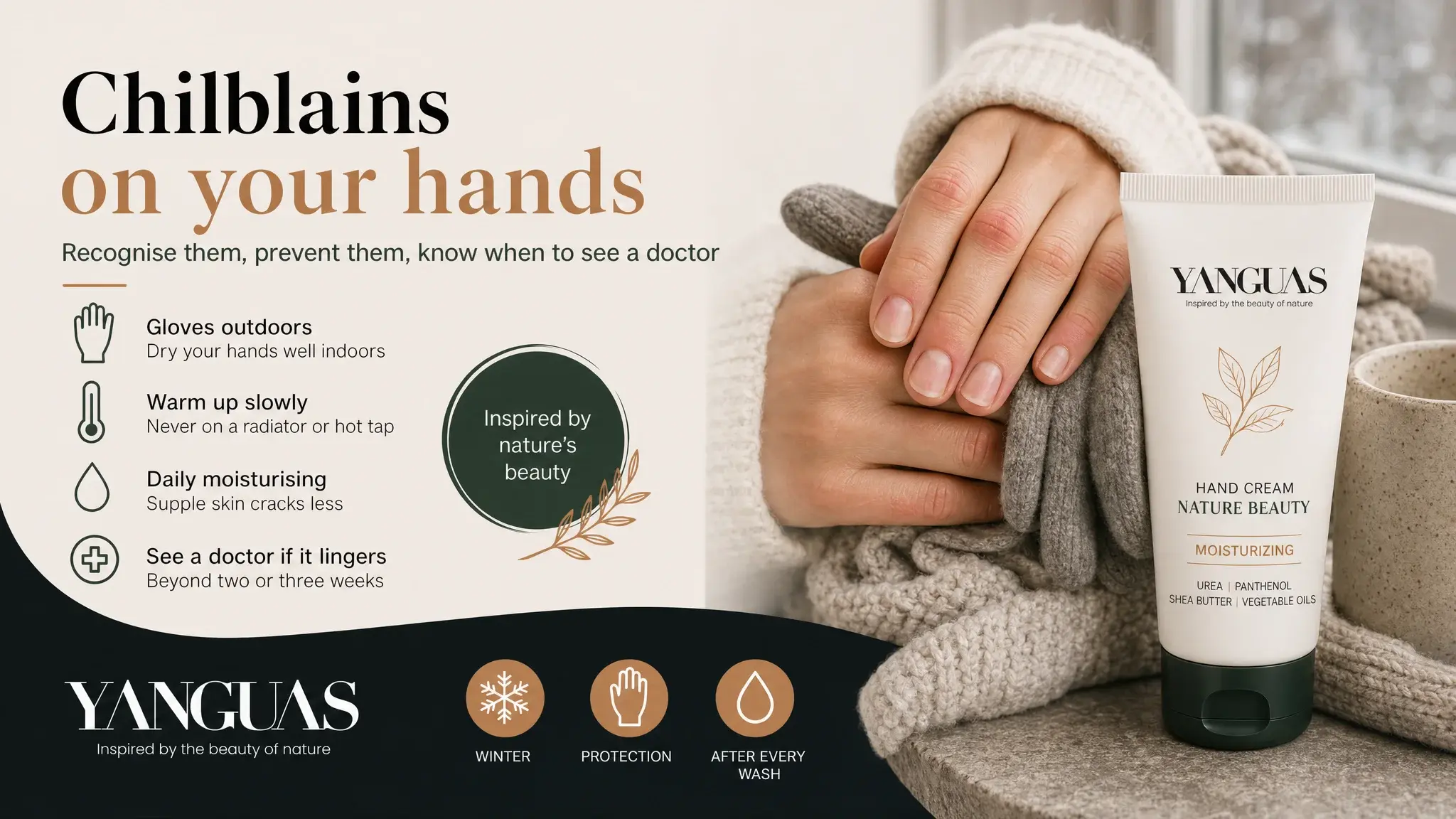
Prevention works better than any remedy afterwards, and it comes down to two ideas: keep your fingers from getting cold and, if they do, let them warm up slowly. These are the steps, in the order they come up on a winter day:
- Go out with gloves on. The Spanish Academy of Dermatology and Venereology (AEDV) asks for gloves and warm clothing above all from people who are sensitive to cold and tend to get perniosis, the medical name for chilblains. Wear them at home too when handling ice or frozen food.
- Dry your hands as soon as you come in. If they got wet or your gloves are damp, dry them well, between the fingers too, before doing anything else.
- Warm your fingers gradually. Do not rest them on a radiator or hold them under the hot tap: let them come back to temperature indoors, with dry hands, without seeking direct heat.
- Mind what affects circulation. The NHS advises not smoking, avoiding drinks with caffeine and not taking nasal decongestants; if you need one for a cold, ask at the pharmacy first.
- Do not scratch. However much it itches, scratching or picking the skin leaves it open, and broken skin is already a reason to get it checked.
The check is simple. If hours go by after a cold morning and no red patches or itching appear on your fingers, the routine is working; if they still turn up every winter, it is time to talk to your doctor about it.
What a Moisturising Cream Can and Cannot Do
A moisturising cream works on the outermost layer of the skin. It does not reach the inflamed vessels, so it does not cure a chilblain or make it last any less, whatever a pack may promise about warmth or relief. Be wary of any cosmetic product presented as a chilblain treatment.
What it can do is keep the skin on your hands hydrated and protected while winter strips water from it through cold, wind and washing. The same AEDV note recommends moisturising the skin every day and several times a day, and pairing gloves with barrier creams. Supple skin cracks less, and a crack next to a chilblain is a wound nobody needs.
How you apply it matters as much as the cream. Put a small amount on clean, thoroughly dry hands, massage until it is fully absorbed and spend longer on the knuckles and cuticles, where skin dries out first. Repeat after every wash, because water and soap take away what you put on in the morning.
On a closed chilblain you can spread it gently, without rubbing the inflamed area. On broken skin, wounds or anything oozing, do not apply any cosmetic cream on your own: that is the moment to get advice. For the itching, a pharmacist can suggest a soothing lotion, which is a different thing from a hand cream.
When to See a Doctor or Pharmacist
Most chilblains heal on their own, but some signs change the plan. Book an appointment with your GP if any of these happen:
- The skin is not getting better after two to three weeks.
- Pus is coming out of the area.
- You have a very high temperature, or feel hot, cold or shivery.
- The chilblains keep coming back.
- You have diabetes.
- The skin breaks or a finger turns black, two signs MedlinePlus lists as well.
- Your fingers change colour and you do not know why.
A doctor can prescribe medicine that helps widen the blood vessels and, if the cause is unclear, refer you to a specialist for tests. For smaller worries, such as itching that keeps you awake, the pharmacy is a good first stop: the pharmacist can tell you whether a lotion is enough or whether you need to see a doctor.
For the next cold day, keep a pair of gloves in your coat pocket and make a habit of a small amount of Nature Beauty hand cream on your knuckles and cuticles after every wash. With urea, panthenol and shea butter it keeps the healthy skin around your fingers hydrated, while cold avoidance, slow warming and, when needed, your doctor take care of the chilblain.