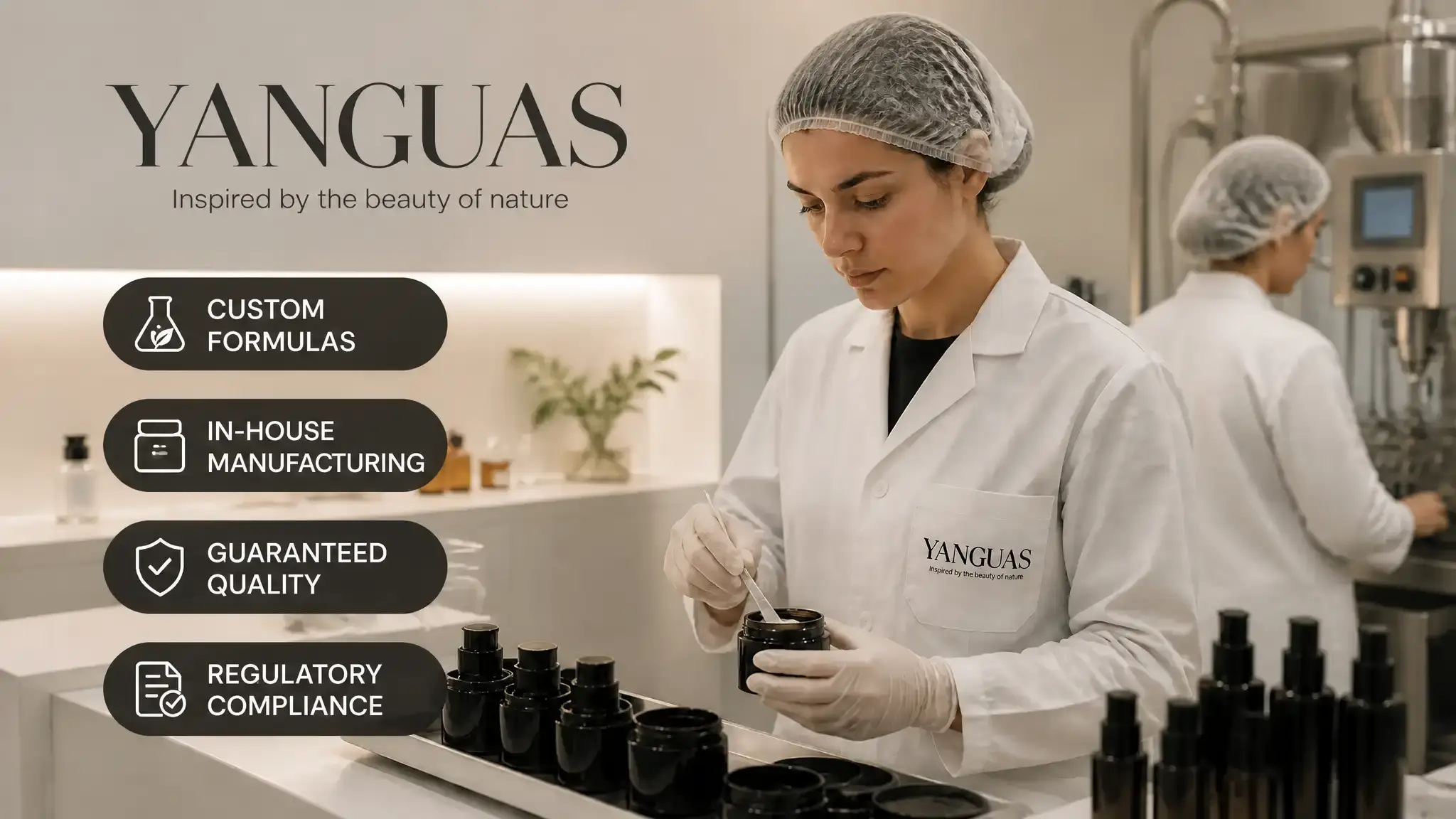
A third-party cosmetics laboratory should cover the full cycle: feasibility study, custom formula, packaging and labelling, manufacturing, physical and microbiological testing of each batch and the paperwork to sell in the EU. Before signing, ask which stages it carries out in its own plant, which it subcontracts and which regulatory documents it hands over.
Which Stages Should the Laboratory Carry Out in Its Own Plant?
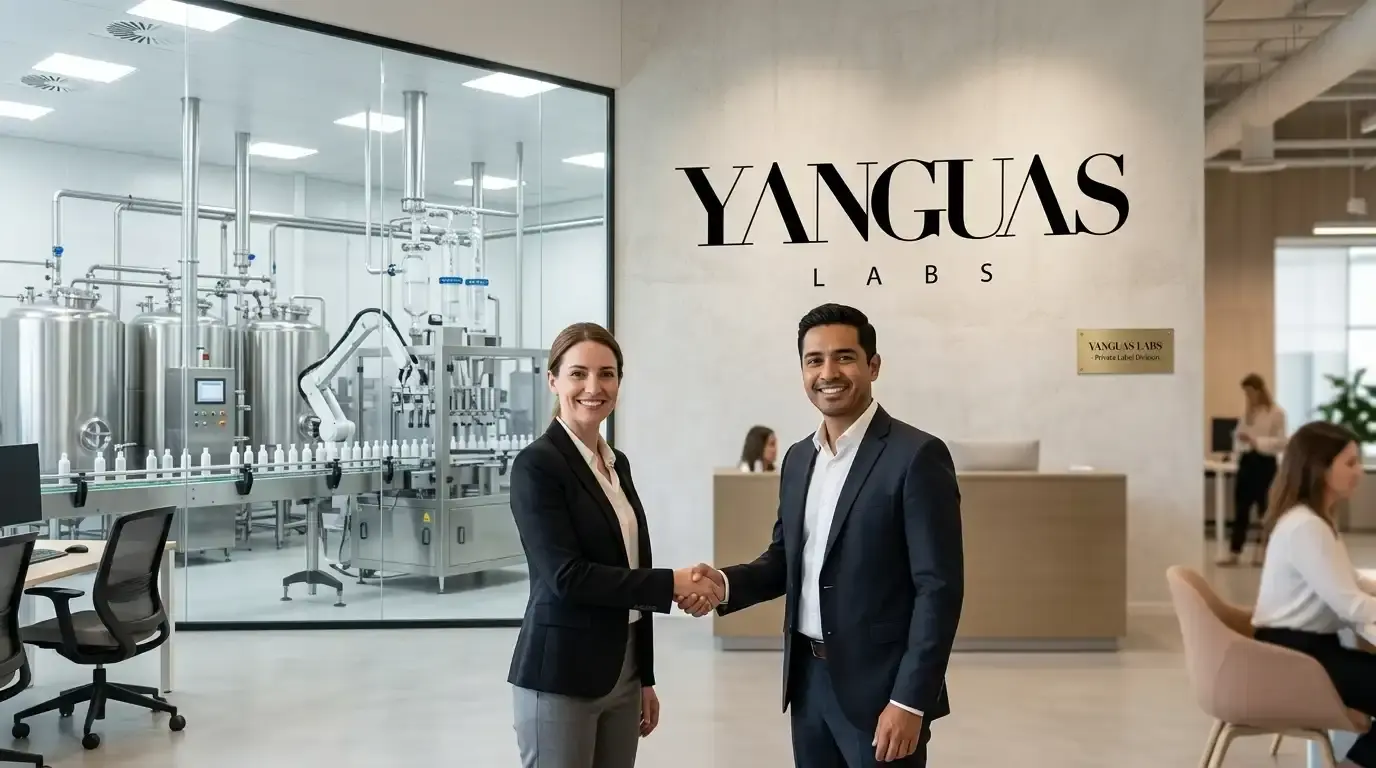
The difference between a manufacturer and a middleman lies in how many stages happen under one roof. A middleman coordinates suppliers; a manufacturer researches, formulates, produces and fills, and that means a single point of contact from the idea to the released batch.
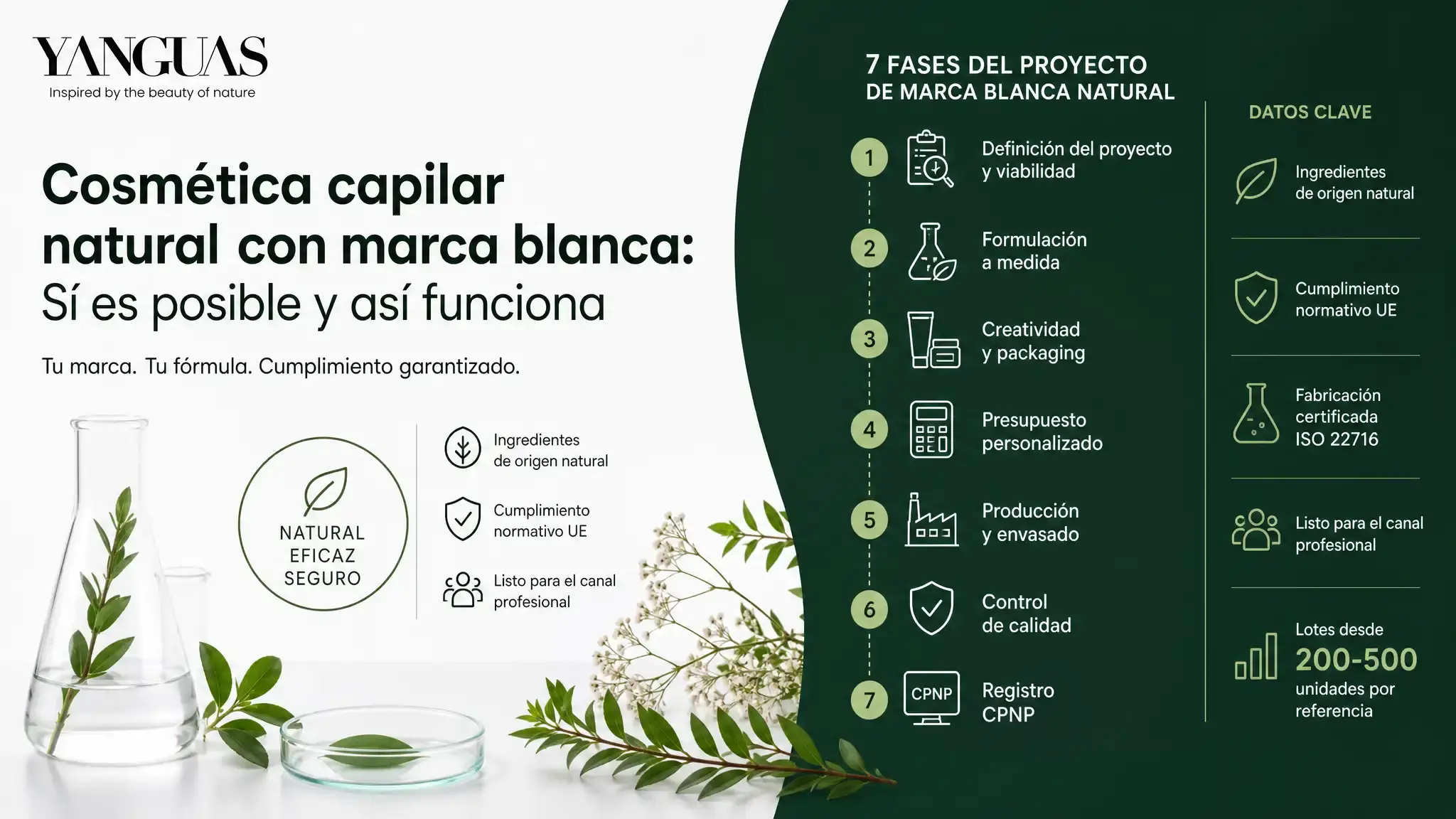
In the Yanguas Professional service the stages run in this order:
- Project definition and technical feasibility study.
- Formulation, with samples until the final formulas are validated.
- Creative: design, packaging and sales copy.
- Custom quote, before raw materials are committed.
- Production: manufacturing and filling in Tudela (Navarre).
- Physical and microbiological analysis before the batch is released.
- Registration under European rules.
Yanguas does not subcontract manufacturing. Packaging does involve an outside network: the laboratory advises among its approved suppliers or works with the pack the client proposes.
Your Own Formula or a Custom One
Both routes are possible. If you arrive with a defined formula, the laboratory assesses it, checks its stability and adapts it so it can be made at scale and meets the rules; if you start from scratch, the R&D team develops it from the briefing.
That briefing asks for five things: the brand's positioning, the price range, the actives you want, the texture and the audience it is for. With them the laboratory chooses among the technologies it works with, from nanotechnology and hair epigenetics to Plex technology, plant and vegan actives or vitamin complexes.
The formula that comes out of it is yours. Yanguas guarantees by contract that the formula developed is the client's intellectual property and that the project, including the relationship with the manufacturer, stays confidential. It makes colour, bleach, perms and straightening, hair care, styling, face and body care, a men's line, curly method products and vegan formulas.
What Tests Are Run Before a Batch Is Released?
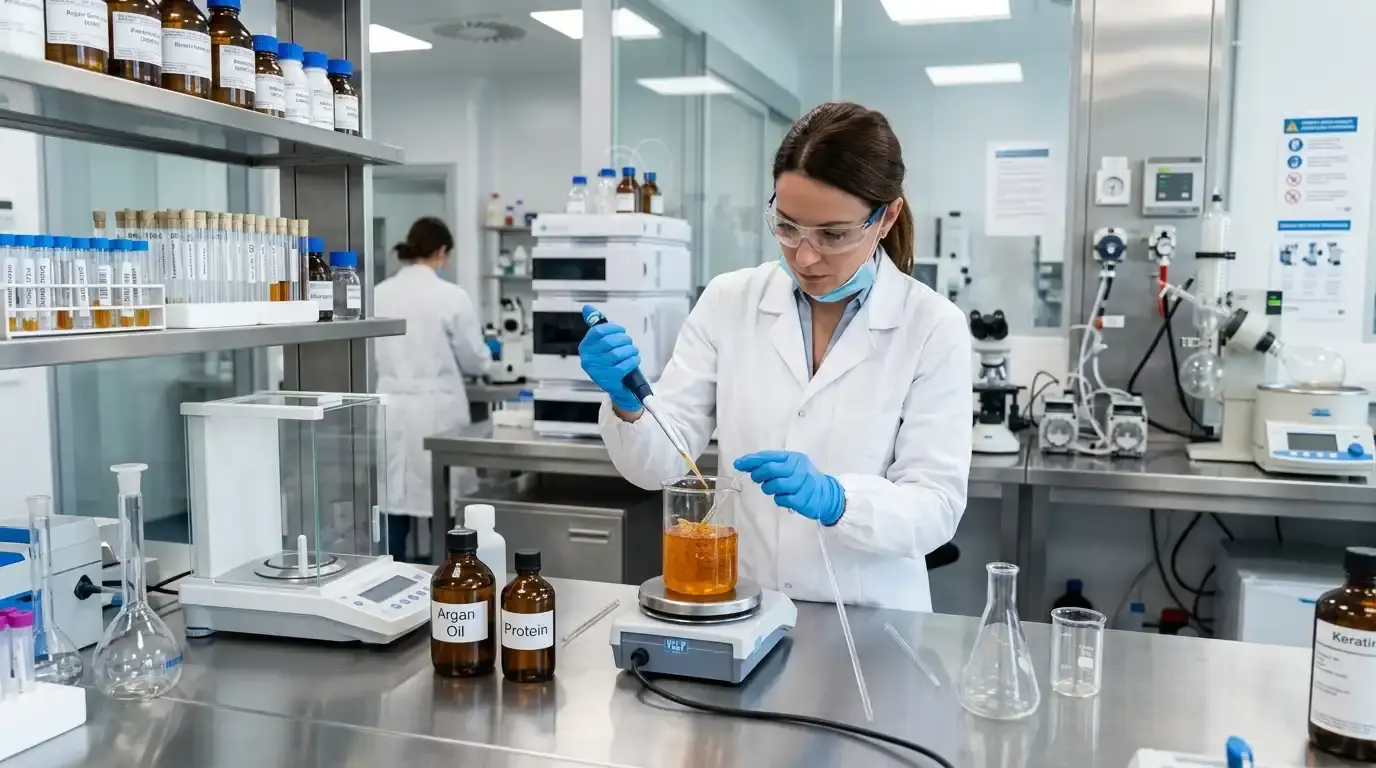
Every batch is analysed at the Tudela facilities with physical and microbiological tests, and only a batch that passes leaves the factory. That batch release is what guarantees that unit number one thousand behaves like the sample you approved.
The system behind it has two references: Yanguas holds ISO 9001 certification from TÜV Rheinland, valid until 2029, and manufactures under the good practices of ISO 22716, the international guideline for producing, controlling, storing and shipping cosmetics.
💡 Technical tip: close the packaging and the sales copy before approving the quote. The creative stage comes before production so that no late change forces a reformulation with raw materials already bought.
Which Documents the Laboratory Prepares and Which Stay in Your Name
Yanguas puts it this way in its service: it handles all the regulatory work needed to sell the product legally in the EU, with the product information file, the safety report, notification on the European Commission's CPNP portal and labelling that complies with the rules. Labelling covers the INCI list, permitted claims, mandatory information and regulatory symbols.
The laboratory preparing the documents does not change who answers for the product. The AEMPS frequently asked questions on Regulation (EC) No 1223/2009 explain that every cosmetic needs a responsible person established in the EU, whose name and address appear on the label, who notifies the product before it is sold and keeps the file at that address. They also make clear that whoever has a product made and sells it under their own brand counts as the manufacturer, even without producing it.
In practice the product will carry your brand, so who appears as responsible person is a clause worth fixing in writing before the first production run.
How Long Does a Project Take and What Does It Cost?
The timing depends on how much is customised. According to Yanguas, a product with a simple formula and standard packaging can be ready in around 8 to 12 weeks, and more customised projects take longer; at the briefing you receive a schedule with every stage.
The price depends on the project's complexity, which is why the quote is the fourth stage and not the first: it is worked out on the formula and pack already chosen. Minimum volumes vary by product type and pack format, and they are studied case by case, looking for the smallest volume the factory can run for a first launch.
Before booking the briefing meeting with Yanguas Professional's laboratory services, write down the product type, the format, the volume you expect and the date you want to sell it: with those four answers, the first meeting is for deciding, not just for asking.