Curly Method in Hairdressing: How to Make it Profitable in the Salon
Back to the blog

Curly Method in Hairdressing: How to Make it Profitable in the Salon

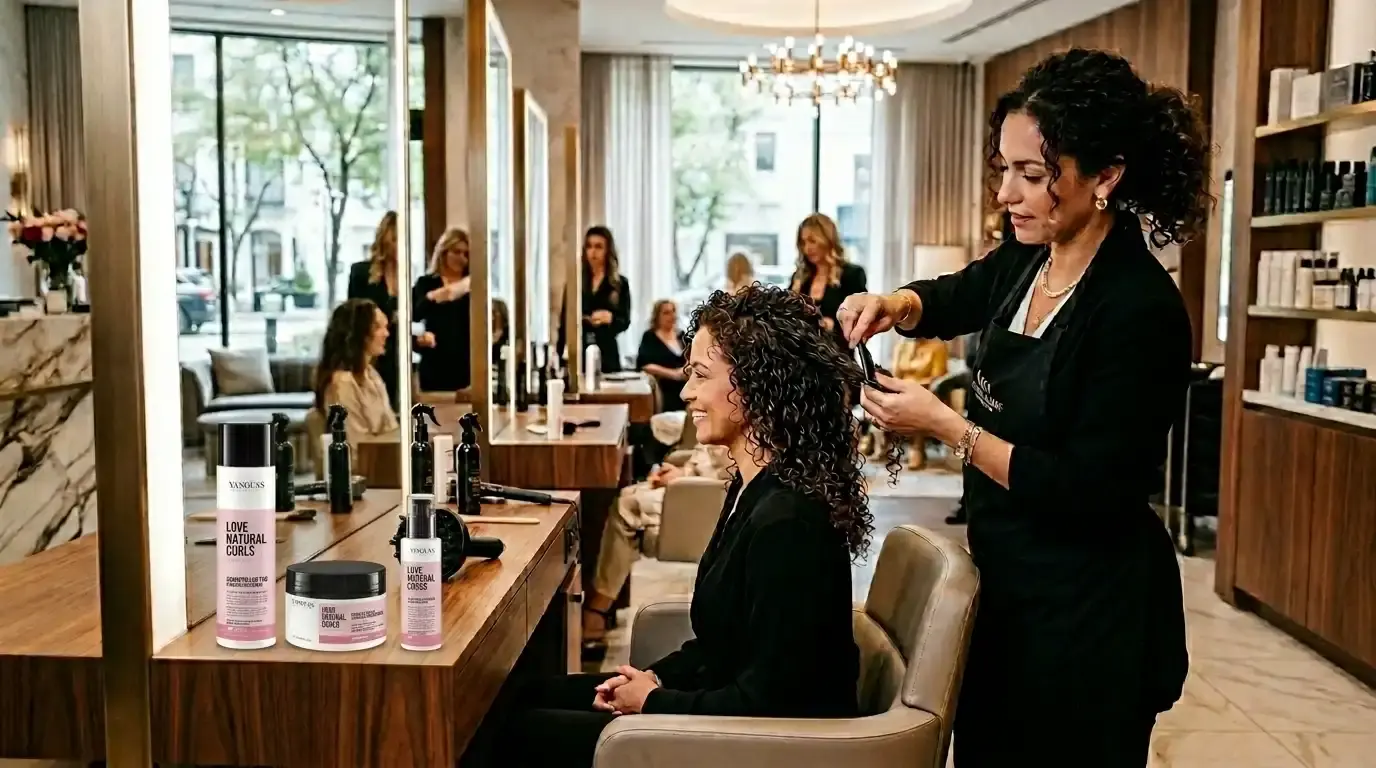
Curly hair has been gaining prominence for years in social media, specialized magazines and, above all, in the minds of thousands of clients who no longer want to straighten their hair. They want to understand it, care for it and show it off. The question many salons have yet to answer is whether they are prepared to serve them.

The Curly Method is not a passing fad: it is a specific work system that requires training, the right product and a clear service structure. Salons that integrate it correctly build loyalty with a clientele that previously couldn't find their space, increase their average ticket and build a real competitive advantage.

Main Conclusions

The essentials about the Curly Method as a professional service, summarized in five points:

What Is the Curly Method and Where Does It Come From?

The Curly Method, also known as CGM (Curly Girl Method), was developed by American stylist Lorraine Massey in the late nineties and popularized through her book Curly Girl: The Handbook, published in 2001. Its premise is simple but radical: curly hair does not need to be tamed, but understood.

The CGM is based on avoiding aggressive ingredients —mainly sulfates, non-water-soluble silicones, drying alcohols and parabens— that damage the curl structure, dry out the hair fiber and cause frizz. Instead, it proposes gentle washing techniques, deep hydration and definition without excessive heat.

What started as a self-care movement for women with difficult-to-manage curls has become a technical segment with real demand in the professional salon. The curly client already arrives with their own vocabulary: they know what co-wash, scrunching, plopping or hair porosity is. The professional must be one step ahead.

Why Is Curly Hair a Segment That Cannot Be Ignored?

In Spain, it is estimated that between 30 and 40% of the population has curly or wavy hair. However, for decades that hair type was systematically ignored by the industry. Clients with curls learned to straighten their hair, avoid the salon or cut their hair themselves because they couldn't find professionals who knew how to treat them. That void is, precisely, the opportunity.

Salons specialized in curly hair report a notable increase in the average ticket per service, as curly work requires more time, more product and greater personalization than a standard service. It also generates a higher visit frequency: the curly client cannot go to just any salon, and when they find one they trust, they return.

Added to this is the sustained growth of the natural hair movement and the increasing demand for vegan formulas free of questionable ingredients, which fit with the philosophy of the Curly Method.

The Fundamentals of CGM: What It Involves and What It Prohibits

The Curly Method is not simply using sulfate-free products. It is a complete work system with its own rules, its own terminology and its own application techniques. The pillars of CGM in the salon are four.

Gentle cleansing uses low-poo (shampoo without harsh sulfates) or co-wash (washing with conditioner) so as not to strip the hair of its natural oils. Intense hydration is achieved with conditioners and masks without non-water-soluble silicones, so that moisture penetrates the fiber without creating buildup.

Definition without direct heat combines techniques such as scrunching, finger-coiling or plopping (wrapping damp hair in a cotton t-shirt) with a low-temperature diffuser. And curly hair is only combed when wet, with fingers or a wide-tooth comb, always with product involved: zero dry brushing.

Prohibited ingredients in the CGM include strong sulfates such as Sodium Lauryl Sulfate (SLS), non-water-soluble silicones (identifiable because they end in -cone, -conol or -xane), drying alcohols and mineral oils. Any product used in a curly service must be checked against its INCI list before application.

What Types of Curls Exist and How Does the Service Approach Change?

One of the first mistakes of a professional approaching the curly world without training is treating all curls the same. The reality is that curly hair is the most diverse hair type that exists.

Type Pattern Particularity
Type 2 (wavy) Soft S shape More prone to being weighed down by excess product
Type 3 (curly) Defined loops, wide to tight spiral Requires definition without weight
Type 4 (coily or afro) Zigzag or very tight spiral High porosity, extreme need for hydration

To these groups is added the analysis of porosity (the hair's ability to absorb and retain moisture) and elasticity (an indicator of its protein state). These two parameters determine which products to apply, in what proportion and with what frequency. Without this diagnosis, the result is unpredictable; with it, the service is reproducible, professional and loyalty-building.

💡 Professional tip: do not evaluate the curl type only when dry. Porosity and elasticity are only correctly checked with wet hair and no residual product.

Training: The Investment You Cannot Skip

The Curly Method requires specific training. It is not enough to have watched tutorials on the internet or to have been styling curly clients for years in the traditional way. The CGM has its own protocol, its own cutting techniques —usually dry or in three phases: dry, wet, dry— and a way of communicating with the client that must be learned.

Professional training must cover, at a minimum, the structure of curly and wavy hair, the diagnosis of porosity and elasticity, suitable and prohibited ingredients in the CGM, specific cutting techniques, product application, the creation of personalized routines and the curly client's own vocabulary.

There are in-person and online training courses oriented towards the professional salon, such as the Método Curly de Universidad de la Imagen, specifically designed for stylists who want to specialize in this segment.

A professional trained in curly hair not only offers better results: they generate trust, create loyalty and can justify higher rates.

Product and Service Structure in the Salon Menu

Not all products on the market are suitable for the CGM, and it is not enough for the manufacturer to claim it on the packaging: you must read the INCI list and verify the absence of incompatible ingredients. The minimum professional stock includes clarifying shampoo for the first transition wash, low-poo or co-wash for regular cleansing, silicone-free conditioner, deep hydration mask, leave-in or leave-in cream and defining gel or foam free of drying alcohols. The salon must also have a quality diffuser, root clips and a standardized diagnostic protocol.

One of the most common mistakes is adding the curly service to the menu without its own price, without assigned time and without a clear protocol. The result is a service that is not charged correctly, that disorganizes the schedule and that does not generate the expected profitability.

Curly initiation
90-120 minutes, diagnosis + transition + definition
Curly maintenance
60-90 minutes, wash + treatment + definition
Curly cut
dry or in three phases, combinable with maintenance

Each service must have its own price, communicated clearly in the salon menu. The price is justified by the specialization, the time and the quality of the product, and it does not compete with the standard service: it is a different category. The sale of products for home use —the personalized routine— is another revenue stream that the specialized salon activates naturally, because the client needs guidance and trusts their stylist's judgment.

💡 Professional tip: always clarify the hair before the first curly service. Removing previous silicone buildup is what allows the rest of the protocol to work from the first session.

Pre-Diagnosis and Service Profitability

In the Curly Method, the service starts before opening the tap. The consultation and pre-diagnosis are the most critical moment of the entire experience: you have to assess the curl type, porosity, elasticity, chemical history —coloring, bleaching, previous straightening— and the current routine at home.

With this information, the professional designs a personalized protocol, selects the right products and sets realistic expectations. A curl in transition does not give the same results as a healthy and stabilized curl, and explaining this clearly avoids frustration and builds long-term trust. The client file must be updated at each visit as a technical history of the hair's evolution.

The profitability of the curly service is not automatic: it depends on having structured it well, being trained and working with the right product. The higher average ticket is justified by the time and product the service requires, while high loyalty —the curly client who finds a good professional does not change them— ensures a stable visit frequency. Added to this is the sale of products for home use, differentiation from salons without specialization and organic recommendation from a very active community on social media.

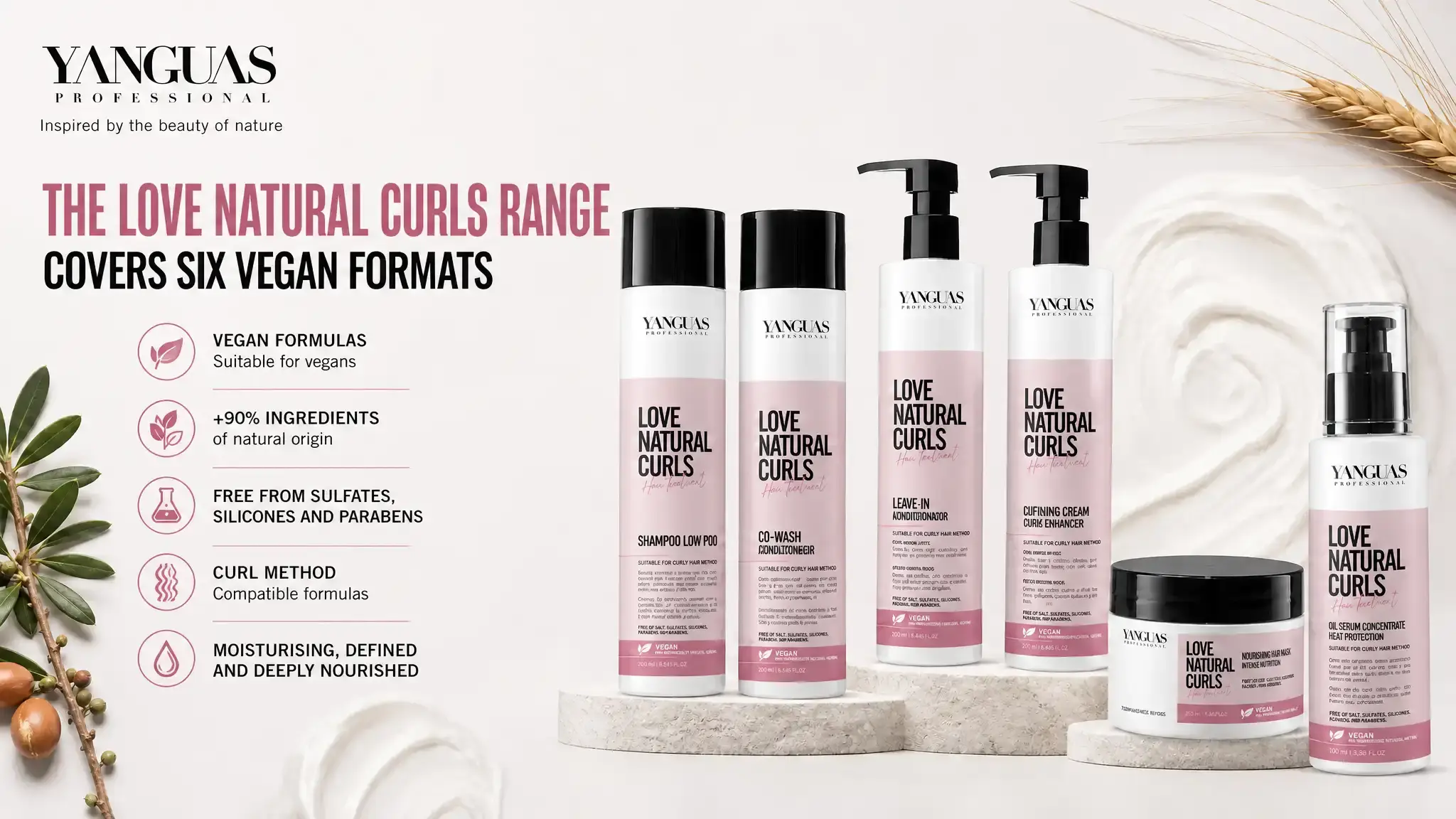
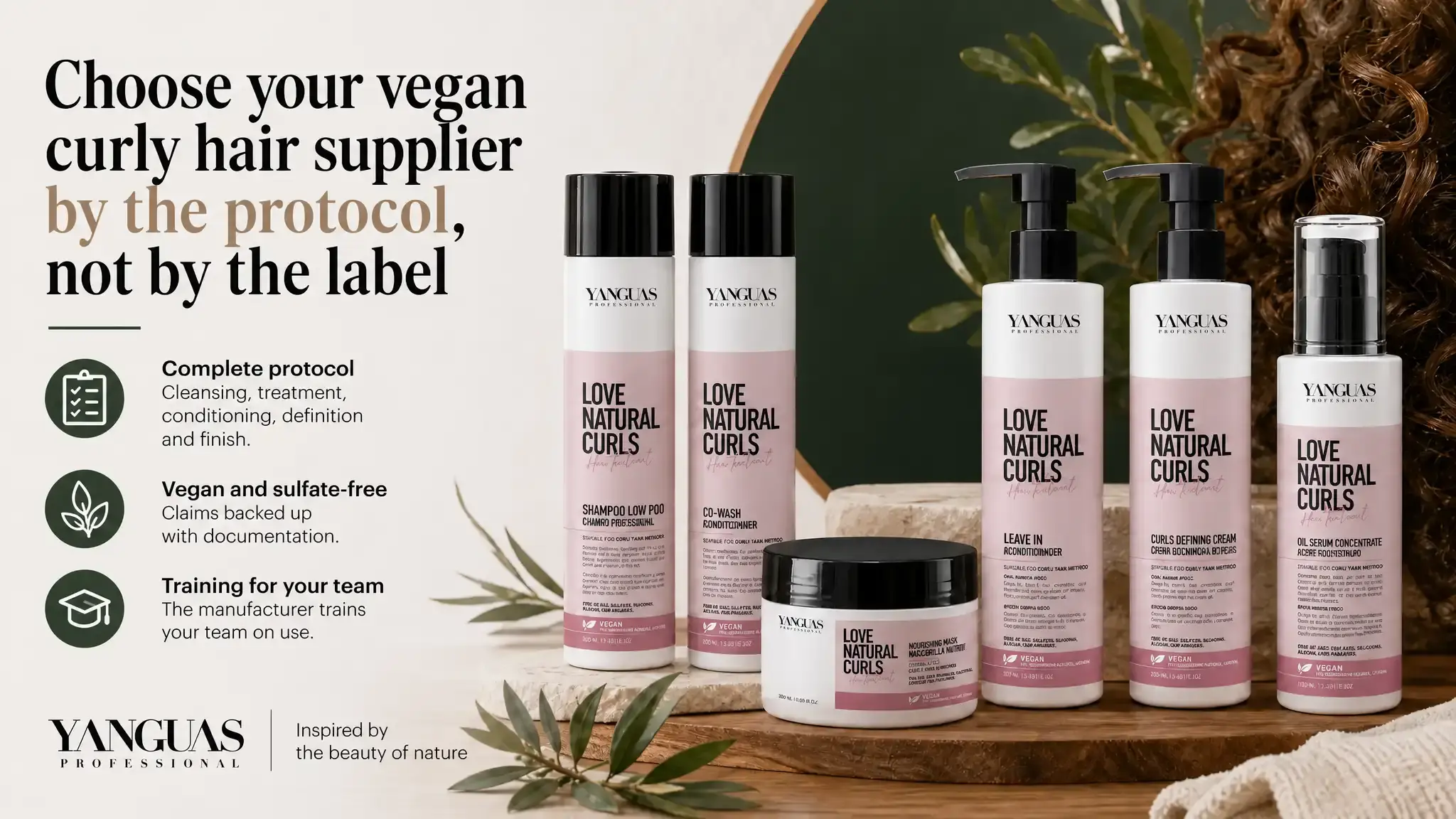
Integrating the Curly Method requires working with products that truly comply with CGM principles: without harsh sulfates, without non-water-soluble silicones, without parabens, with verifiable quality ingredients and stable formulations batch by batch. The Love Natural Curls range from Yanguas Professional is manufactured at the Tudela (Navarra) facilities, with its own R&D laboratories and ISO 22716 Good Manufacturing Practices certification, and is formulated without sulfates, without silicones and without parabens, with active ingredients such as hyaluronic acid, keratin and natural oils adapted to different curl types.

Frequently Asked Questions

What differentiates the Curly Method from a standard hairdressing service?

The Curly Method follows its own protocol: sulfate-free cleansing, silicone-free hydration and definition without direct heat. It requires diagnosis of curl type, porosity and elasticity before applying any product, something a standard service does not consider.

Is it necessary to train specifically to offer curly services?

Yes. The CGM has its own terminology, dry or three-phase cutting techniques, and a way of communicating with the client that is not acquired just with general hairdressing experience. Specific training is what differentiates the specialist from the professional who improvises.

How is a higher price for the curly service justified?

The curly service requires more time, more product and greater personalization than a standard cut or wash. Structuring it as its own category in the menu, with assigned time and price, is what allows it to be charged consistently with its complexity.

What ingredients should be avoided in a product for curly service?

Strong sulfates such as Sodium Lauryl Sulfate (SLS), non-water-soluble silicones —identifiable because they end in -cone, -conol or -xane—, drying alcohols and mineral oils. It is advisable to always check the INCI list before applying any product.

Why is it profitable to specialize in curly hair?

Because it combines a higher average ticket, high loyalty, recurring sale of products for home use and clear differentiation from salons without specialization, in a segment that represents between 30% and 40% of the population.