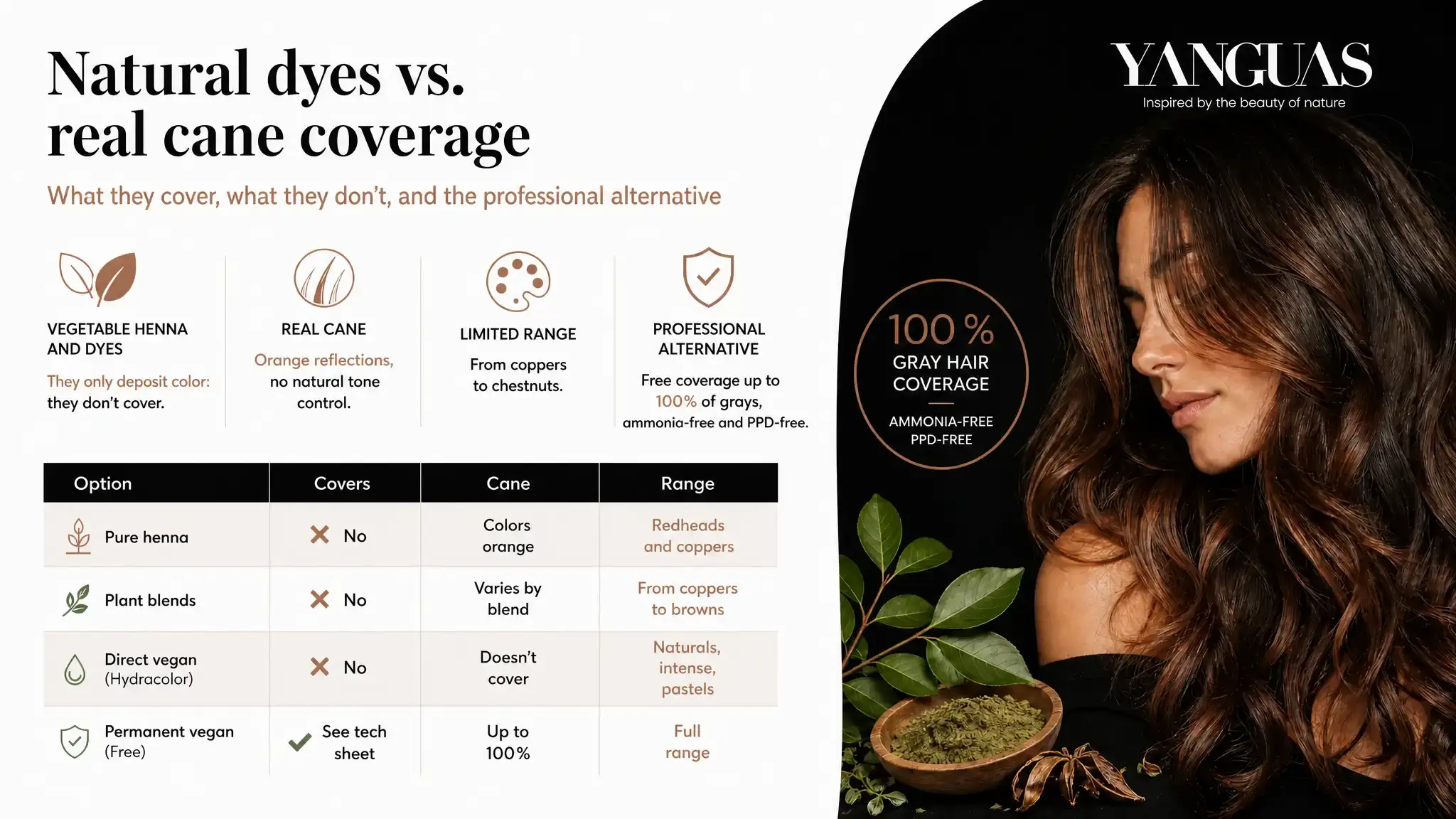
Professional ammonia-free hair colour is a permanent oxidative colour that replaces ammonia with another alkalising agent, usually MEA: it removes the strong smell and the itching, not the chemistry. The best one covers up to 100 % of grey, protects the fibre during oxidation and, if the salon serves sensitive scalps, is also free of PPD.
What Changes, and What Does Not, Without Ammonia
A permanent colour needs an alkaline medium to open the cuticle so the pigment can enter and be fixed by the developer. Without that step there is no permanent colour, with or without ammonia. What changes is the alkalising agent: the usual alternative is monoethanolamine (MEA).
Ammonia is volatile and evaporates during processing; MEA does not, which is why it has no smell. That same difference has a cost: a study published in the Journal of Cosmetic Science measured more fibre damage with MEA formulas than with ammonia, up to 85 % more in the most extreme case.
The practical conclusion is that "ammonia-free" does not automatically mean "gentler". The result depends on the formulation, the protection it carries and how it is handled at the chair.
💡 At the chair: keep to the processing time the manufacturer gives (30 to 45 minutes for Free, depending on the base shade) and do not extend it to be safe; more time does not give more colour.
What Is the Best Ammonia-Free Colour for Covering Grey?
The one that claims full grey coverage and backs it with a clear technique for high percentages. It is the client's first question, and the one that wins or loses most services.
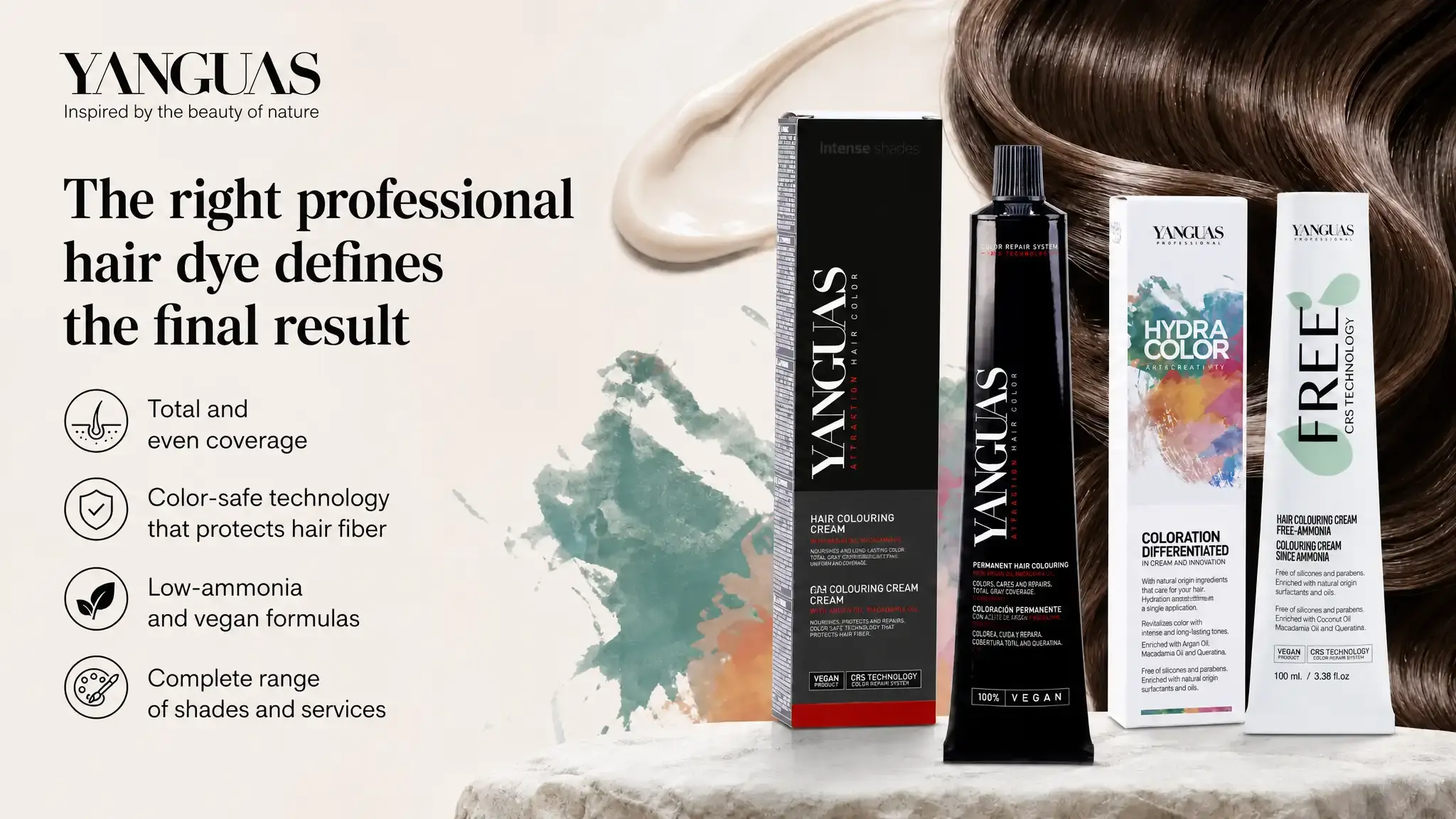
Free, the ammonia-free colour by Yanguas Professional, covers up to 100 % of grey with a natural, even finish:
- Type
- Ammonia-free permanent cream
- Free from
- Ammonia and PPD
- Actives
- Argan oil and keratin
- Technology
- Repair Oil + CRS
- Mixing
- Yanguas cream developer, 1:1
- Processing time
- 30 to 45 minutes
- 70 to 100 % grey
- Half shade, half natural base
- Size
- 100 ml
It is compatible with keratin treatments, so a client with a smoothing service can colour without losing it.
What Are the Disadvantages of Ammonia-Free Colour?
It has three technical limits worth explaining before the service, not after.
| What the client believes | What to explain |
|---|---|
| "It does no damage" | It is still oxidation; damage depends on the formula |
| "It lifts just as well" | It does not replace bleach for going blonde |
| "It is for allergy sufferers" | The usual allergen is PPD, not ammonia |
The third point matters most. The review on paraphenylenediamine published in Actas Dermo-Sifiliográficas identifies PPD as the main cause of contact dermatitis from hair dyes, and points to hairdressers as the most exposed group because of their daily contact with dyes. A colour that drops ammonia but keeps PPD does not solve that risk; Free is free of both.
How to Explain Ammonia-Free Colour to the Client
The most common mistake is repeating the marketing line: "it's natural", "it does no damage", "it's for everyone". These are promises the result does not always keep, and when it fails the client loses trust in the professional's judgement.
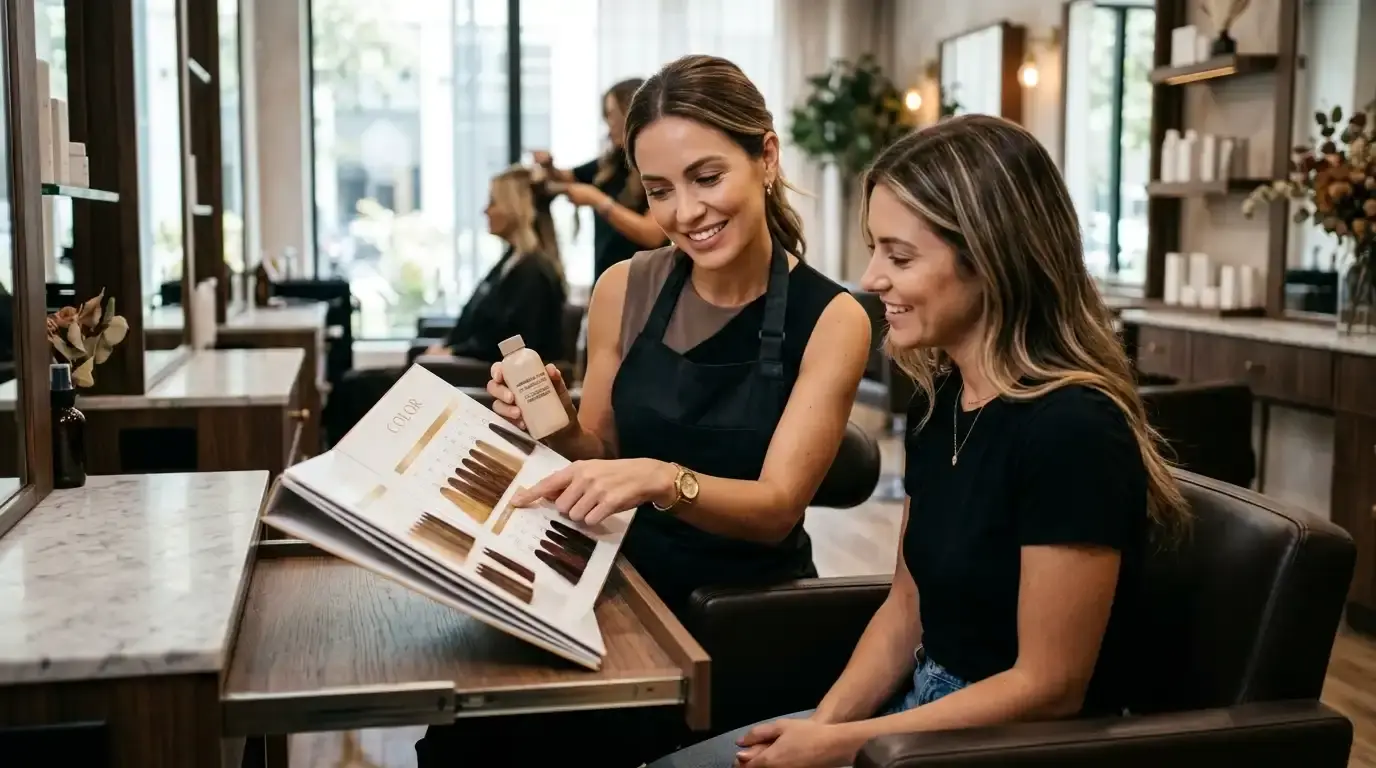
It works better to talk about the experience and be precise about the limits. Instead of "it does no damage", say: "it works with a different alkaliser, with no strong smell or itching, and it carries oils that protect the fibre". Instead of "it's natural", say: "it is still a permanent colour, but the process is much more comfortable".
That way of talking is what justifies a different price. A stylist who explains the chemistry with confidence projects authority over one who only repeats the product name.
How to Turn It Into a Salon Service
Ammonia-free colour works better as a named service on the menu than as a hidden option. "Comfort Colour" or "Odour-Free Colour" convey the offer without getting into chemistry.
It suits hair already treated with bleach, smoothing or keratin, sensitive scalps and clients who want to maintain or correct their shade without a radical change. For strong lift or very resistant grey, permanent colour with ammonia still has its place, and it is worth saying so; we go through when each one fits in which professional hair colour salons use.
The service raises the ticket when it comes with colour care, such as a nourishing treatment after colouring or the vegan Vibrant Color Protect for home use. The Free line, with its shade chart, is in the Yanguas professional colour section.