Epigenetic Treatments in the Salon: Science and Profitability
The technical conversation in the professional salon is changing. Where we once spoke of hydration, repair, or pigmentation, today concepts like gene expression, microRNA, and epigenetic regulation of the follicle are emerging.
Hair cosmetics have entered the era of biotechnology, and salons that understand this transition build more profitable, more differentiated services that are better aligned with an increasingly well-informed client.
Key Takeaways
The essentials of epigenetic cosmetics applied to the salon, summarized in five keys:
What Is Hair Epigenetics and Why Is It a Trend
Epigenetics studies the mechanisms that regulate gene expression without modifying the DNA sequence. Applied to hair, it starts from a powerful idea: factors such as stress, diet, pollution, or aging leave chemical marks on our hair genes and, therefore, a large part of those effects can be modulated.
The trend reaches the salon because it connects with a consumer who is no longer satisfied with a product that hides. They want to understand what is happening on their scalp, why it is happening, and which active ingredient addresses it.
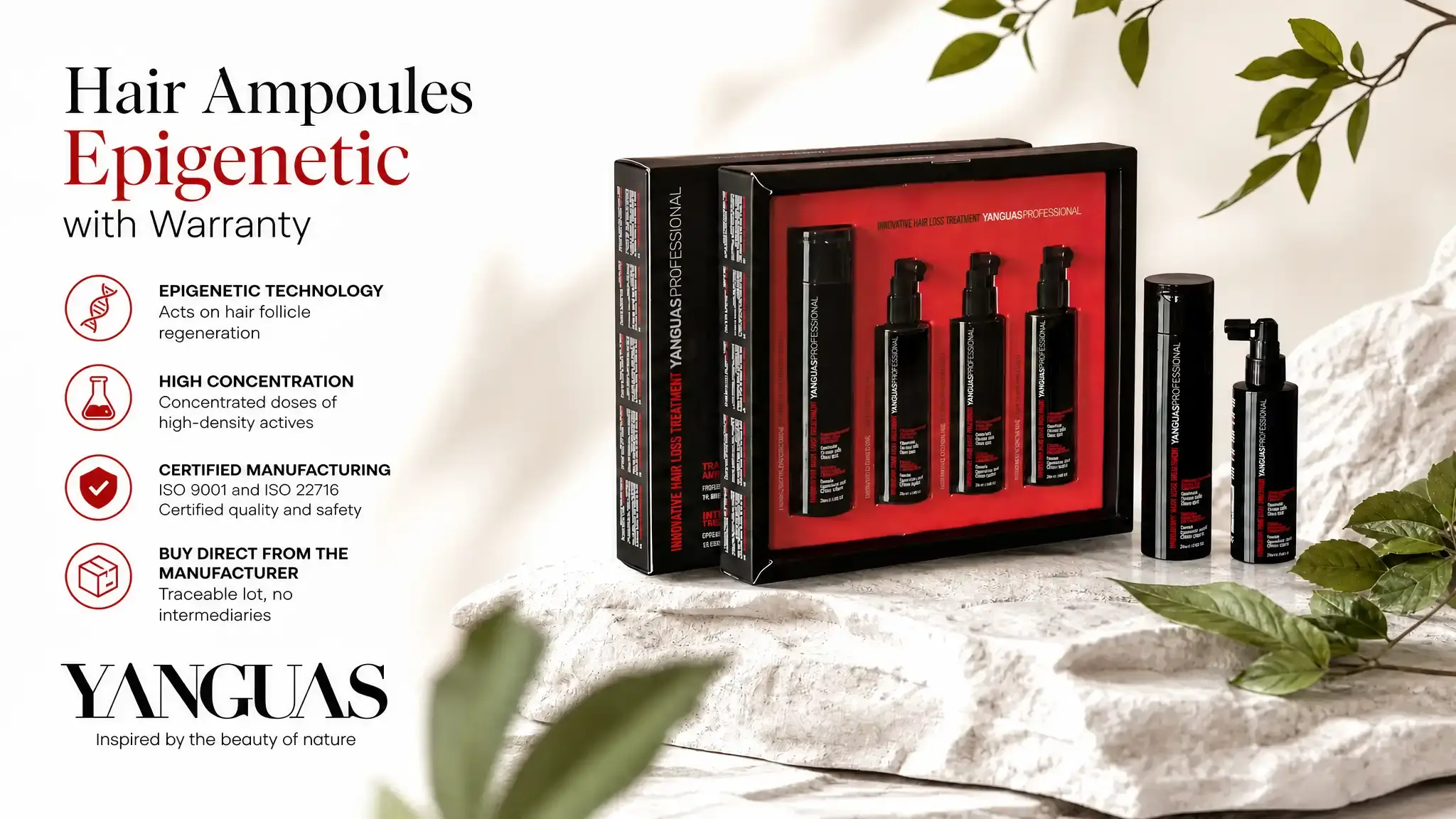
The professional laboratory's response is a new generation of formulas with epigenetic actives formulated to act on the hair follicle, not just on the external fiber.
How It Differs from Traditional Cosmetics
Traditional cosmetics operate on the visible fiber: they provide conditioning, seal the cuticle, restore shine, and reconstruct the damaged cortex. Their action is physical, external, and, to a large extent, temporary.
Epigenetic cosmetics act one step earlier: in the living cell of the follicle, especially in the dermal papilla, the structure that directs each hair cycle. The goal is no longer just "beautifying what is already there" and becomes improving the conditions under which the next hair will be born.
That leap changes the promise to the client: it moves from "your hair will look better today" to "your follicle will work better tomorrow". It is not a marketing nuance, but a repositioning of the service.
Biotechnology and Key Epigenetic Actives
Biotechnology allows for obtaining actives impossible to isolate by traditional methods: bioactive peptides, growth factors, extracellular vesicles, and plant stem cell extracts. Furthermore, it is a more sustainable and traceable route than conventional extraction, aligned with the demand for responsible cosmetics.
In practice, working with these active ingredients translates into concrete benefits for the client, which should be organized against the different actives available:
| Benefit for the client | Active that addresses it |
|---|---|
| Greater hair density and diameter (8-12 weeks) | Biomimetic peptides, plant stem cells |
| Reduction of follicle oxidative stress | Antioxidants: polyphenols, troxerutin, resveratrol |
| Sustained response in incipient alopecia | Extracellular vesicles and small RNAs |
| Rebalancing the scalp microbiome | Hair prebiotics and postbiotics |
Extracts of plant stem cells (Swiss apple, edelweiss, malva, grape) are rich in secondary metabolites and act on the stem cells of the bulge and the dermal papilla. Biomimetic peptides mimic natural follicle signals and reactivate pathways such as Wnt/β-catenin, key for entering the anagen phase.
💡 Trainer's tip: before introducing any advanced active, check the state of the scalp microbiome; without that prior rebalancing, the penetration and response of the treatment suffer.
How Regeneration Works at the DNA Level
The hair follicle goes through cycles of anagen (growth), catagen (transition), and telogen (resting). The transition between phases is regulated by the dermal papilla and by a network of microRNA (miRNA), small molecules that silence or activate specific genes.
Recent research has identified specific miRNAs capable of driving the follicle's entry into the anagen phase, such as miR-218-5p contained in dermal exosomes, which promotes hair regeneration by regulating β-catenin signaling, described in Science Advances. Others, such as miR-195-5p, regulate hair inductivity through the Wnt/β-catenin pathway.
Professional epigenetic actives do not modify the client's DNA: they modulate which genes are expressed and at what time, which offers a powerful and, at the same time, safe lever of action.
Advanced Hair Diagnosis as the First Step
Applying epigenetic treatments without a prior diagnosis is, quite simply, wasting product. Each client arrives with a different scalp, hair loss pattern, and chemical history.
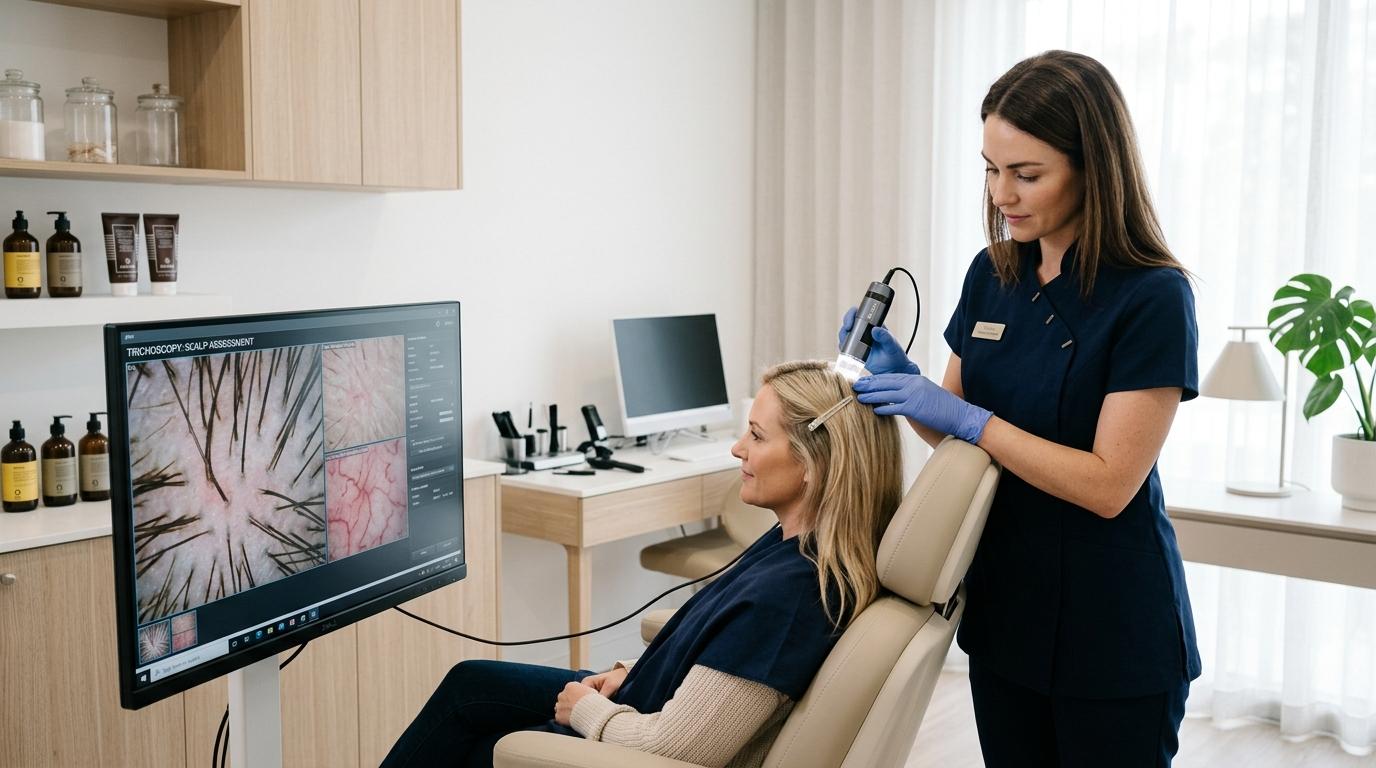
Salons leading this segment incorporate digital trichoscopy, high-resolution cameras, and structured hair history forms. These tools allow for visualizing follicular miniaturization and the state of the scalp with a precision impossible to the naked eye.
Beyond technology, diagnosis conveys something essential: professionalism. Sitting the client down, listening before touching, and showing them images of their own scalp completely changes the perception of the service and, with it, the willingness to pay for it.
In-Cabin Application Protocols
A well-structured professional protocol combines three phases:
- Phase 1 — Preparation
- enzymatic cleaning or scalp exfoliation
- Phase 2 — Application
- ampoules, serums, or masks with massage or steam
- Phase 3 — Sealing
- prescribed home routine for 8 to 12 weeks
- Initial frequency
- one weekly session during the first month
- Subsequent maintenance
- one monthly session
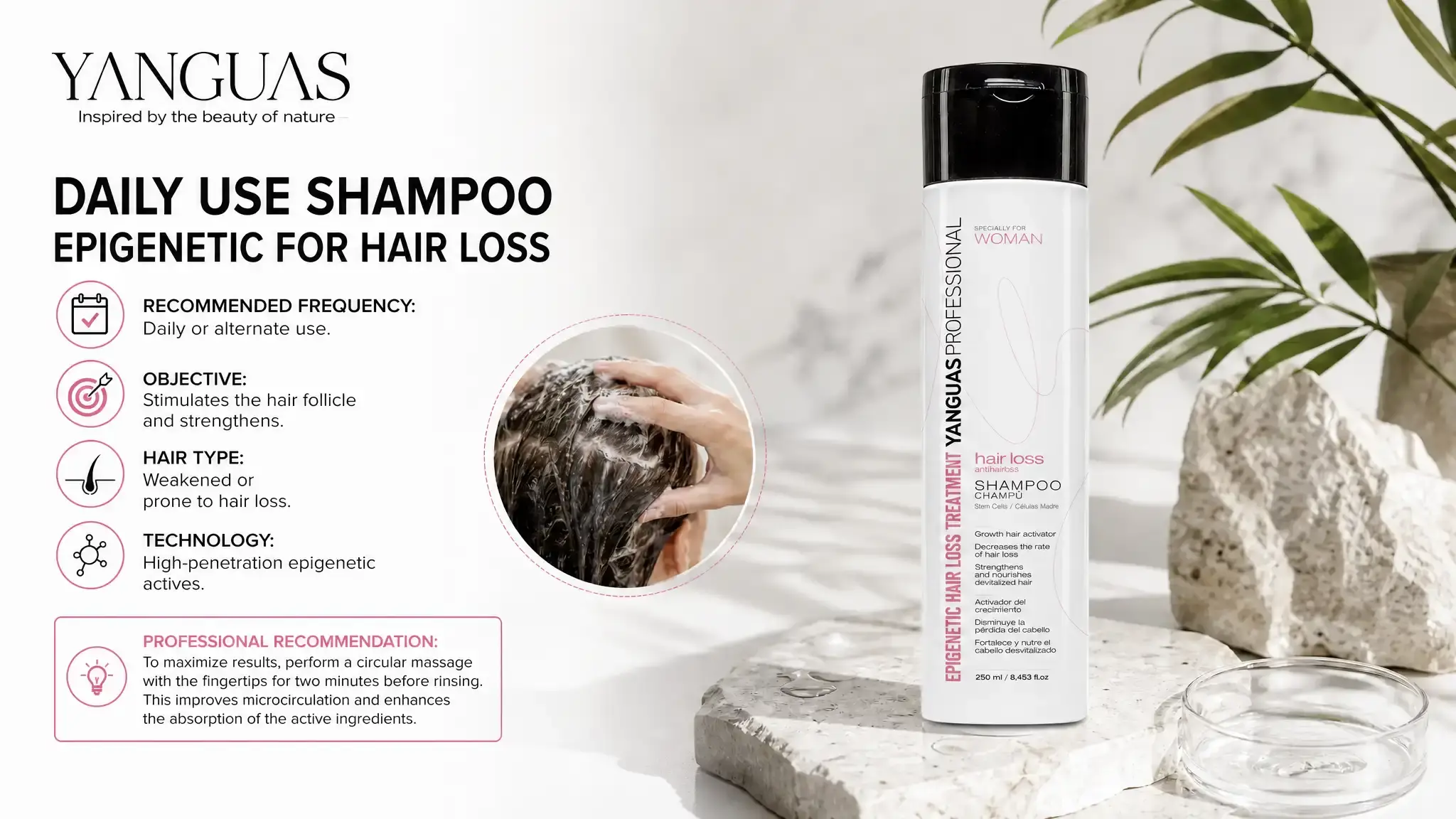
The preparation of the scalp removes residues and allows for the penetration of the actives. The application combines peptides, plant stem cells, and antioxidants, and the result is sustained at home with a routine of shampoo, serum, and intensive treatment. An integral epigenetic anti-hair loss treatment with stem cells and 18 amino acids fits well in this block as the basis for the cabin protocol.
Photographically documenting each visit reinforces the perception of progress and improves client retention.
High Value and Profitability Services
An epigenetic treatment is not sold as an "extra" to the technical service: it is sold as an independent, scheduled, and measurable service. This repositions the hair salon, which stops being an aesthetic touch-up point to become a professional hair health center.
An epigenetic protocol scales better than conventional coloring: it requires less handling, takes up less of the hairdresser's active time, and is billed as a premium service. Salons that integrate a hair health program increase their average ticket through three quantifiable levers:
| Lever | Contribution |
|---|---|
| In-cabin services (per session) | 40 – 90 € depending on protocol and area |
| Cross-selling of home products | Sustains the result between sessions |
| Prepaid multi-session packages | Improve cash flow predictability |
Well managed, an epigenetic program can represent between 15% and 25% of monthly turnover without displacing the core business of coloring and cutting. The female version of the fortifying epigenetic anti-hair loss lotion for women allows the proposal to be expanded to a different audience without duplicating cabin logistics.
Ethics, Credibility, and Team Training
Epigenetic cosmetics operate in a technically sophisticated field, with a clear downside: it is easy to promise too much. Talking about "genetic modification", "DNA rejuvenation", or "guarantee of no more hair loss" is a quick way to lose credibility.
Salons that build real authority do so with three principles: talking about modulation, not a cure, because the actives influence gene expression without rewriting it; showing evidence with before and after trichoscope images and manufacturer data; and recognizing limits, referring to a trichologist or dermatologist when the case requires it.
That technical honesty requires training: genomic cosmetics are not mastered with a product manual. The team must understand notions of follicle physiology, hair cycle, signaling pathways, and diagnosis, accompanied by continuous technical and commercial training, not just a single launch session.
Frequently Asked Questions
Does epigenetic cosmetics modify the client's DNA?
No. Epigenetic actives do not alter the DNA sequence: they modulate which genes are expressed and at what time, acting on the living cell of the follicle, especially the dermal papilla. That is why we speak of modulation, not genetic modification.
How long does it take to see results from an epigenetic treatment?
Objective parameters such as hair density and diameter are usually measured after 8 to 12 weeks of the protocol. The result is maintained with one weekly session during the first month, subsequent monthly maintenance, and a prescribed home routine.
Is diagnosis necessary before applying the treatment?
Yes. Each client has a different scalp, hair loss pattern, and chemical history. Applying without digital trichoscopy or a hair history is wasting product and giving up on demonstrating progress with objective images.
Is an epigenetic protocol compatible with coloring or bleaching?
Yes. Epigenetic treatments act on the follicle and the scalp, not on the fiber, so they are fully compatible with technical services such as coloring, bleaching, and straightening within the salon routine.
How much can it contribute to the salon's turnover?
Well managed as an independent and measurable service —with in-cabin sessions, cross-selling of home products, and prepaid packages— a hair health program can represent between 15% and 25% of monthly turnover without displacing the color and cut business.